EN
How to Choose the Best Cookware for Different Cooking Methods?
As a cookware industry specialist who has spent years evaluating pots and pans across different kitchen environments, I find that one of the most common mistakes buyers make is choosing cookware based on looks or price alone — rather than thinking about the actual cooking methods they use every day. Any useful cookware guide starts with one simple question: what do you actually cook?
That reframe makes the selection process far more practical. I used to assume any decent non-stick pan could handle whatever I threw at it. That is not quite right. What I should say is: any decent non-stick pan will work, but how well it performs — and how long it lasts — depends on whether the material and design match your cooking style. The following breakdown covers what matters most.
Why Cooking Methods Drive Cookware Choice
Different cooking methods create very different demands on your cookware. Sautéing vegetables at medium heat is not the same as searing a thick steak at high temperature. Boiling pasta puts different stress on a pot than slow-braising a stew for two hours. Each method has its own heat requirements, surface needs, and structural demands.
A method-by-method breakdown:
- Sautéing and stir-frying: Requires quick, even heat distribution. Aluminum-based non-stick pans excel here — aluminum heats roughly three to four times faster than stainless steel, making it ideal for eggs, vegetables, and light proteins that need gentle, responsive heat.
- Searing and browning: High temperatures, dry surface. For this cooking method, you want heavier pans that hold heat without dropping temperature when cold food hits the surface. Stainless steel or hard-anodized aluminum with a thick base both perform well. Non-stick coatings are generally not designed for the prolonged high-heat exposure required for proper browning or crust development.
- Boiling and simmering: Needs a deep pot with sufficient capacity and heat-retaining walls. A stainless steel stockpot with an aluminum core provides efficient heating for boiling while maintaining durability for extended cooking sessions.
- Braising and slow cooking: Long, low heat with moisture retention. Look for pots or casseroles with tight-fitting lids and sufficient wall thickness to maintain consistent temperature over time. Lid fit is something buyers frequently overlook — until they discover steam escaping mid-braise.
- Deep frying and pan-frying: Requires high walls to contain oil splatter, a stable flat base for even oil temperature distribution, and materials that safely handle sustained high heat.
Matching Cookware Materials to Your Kitchen
Once you understand your dominant cooking methods, material selection becomes far more straightforward. The main material options, and where each fits:
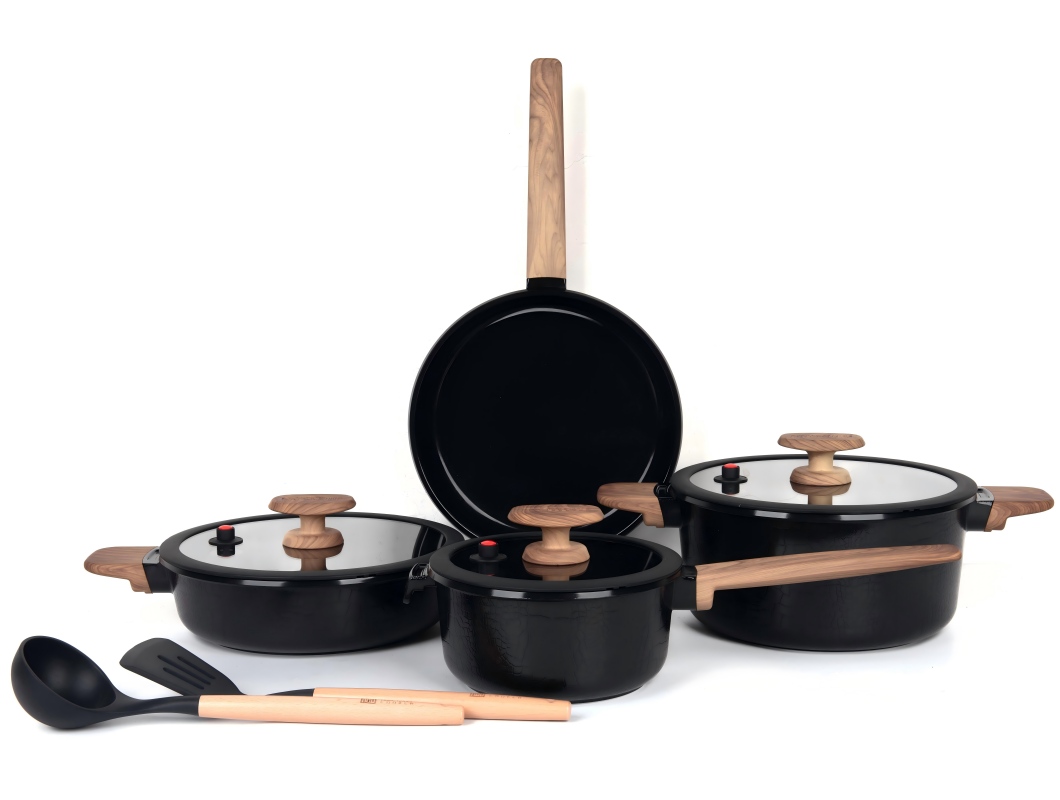
Die-Cast Aluminum Non-Stick
This is the everyday workhorse — particularly suited for sautéing, scrambled eggs, pancakes, and light frying. Die-cast aluminum construction creates a thicker, more rigid base than pressed aluminum, delivering better heat distribution and reduced warping over time. Look for pans with a PFOA-free coating and a reinforced magnetic base if you plan to use them across multiple stovetop types, including induction.
One thing worth being direct about: non-stick coatings are not designed for high-heat searing. If you regularly cook steaks at high temperature or need to deglaze pans for sauces, a non-stick pan is the wrong kitchen tool for that task. That is not a flaw in the product — it is simply the honest reality of what the coating is built for.
Stainless Steel
Stainless steel handles high heat well and is safe for metal utensils, making it the right choice for searing, browning, and any cooking technique that involves building a fond for pan sauces. It is also one of the more durable materials available — free of PTFE and PFOA coatings and resistant to scratching from everyday cooking use. The practical trade-off is that food can stick if you do not preheat the pan properly and use adequate fat.
Heavy-Gauge and Cast Iron Alternatives
Cast iron retains heat exceptionally well, making it ideal for braising, oven-to-stovetop transitions, and dishes requiring sustained, even heat. The main disadvantages are substantial weight and specific care requirements. For buyers who want similar heat retention with reduced weight, heavy-gauge aluminum cookware designed for casserole-style cooking can serve as a practical alternative.
Practical Buying Tips for Your Cooking Setup
Do you use an induction stovetop? If so, that question needs to come before anything else. Induction cooking requires cookware with a magnetic base — typically a bonded layer of magnetic stainless steel fused to the bottom of the pan. Not all aluminum or non-stick cookware is induction-compatible, even when products look identical on the shelf. Check the product specifications before buying; the packaging usually carries an induction symbol where compatibility applies.
Size affects cooking results more than many buyers expect. A 28cm frying pan for a single-person household will take longer to heat up and tend to cook portions unevenly because the food spreads too thin across the surface. A practical starting framework for most households: a 20–24cm pan for everyday tasks, a 26–28cm pan for larger family meals, and a 2–4 litre sauce pan for boiling and sauces.
Handle design is a detail worth evaluating carefully. Heat-resistant handles that stay cool during stovetop cooking are not an optional upgrade — they are a basic safety requirement for anyone who cooks regularly. Riveted handle construction generally outlasts welded alternatives under regular load and repeated daily use.
Building a Functional Cookware Set
Rather than buying the largest available cookware set, consider building around the cooking methods you genuinely use. A well-chosen collection of three to five pieces consistently outperforms a ten-piece set filled with items that rarely leave the cabinet.
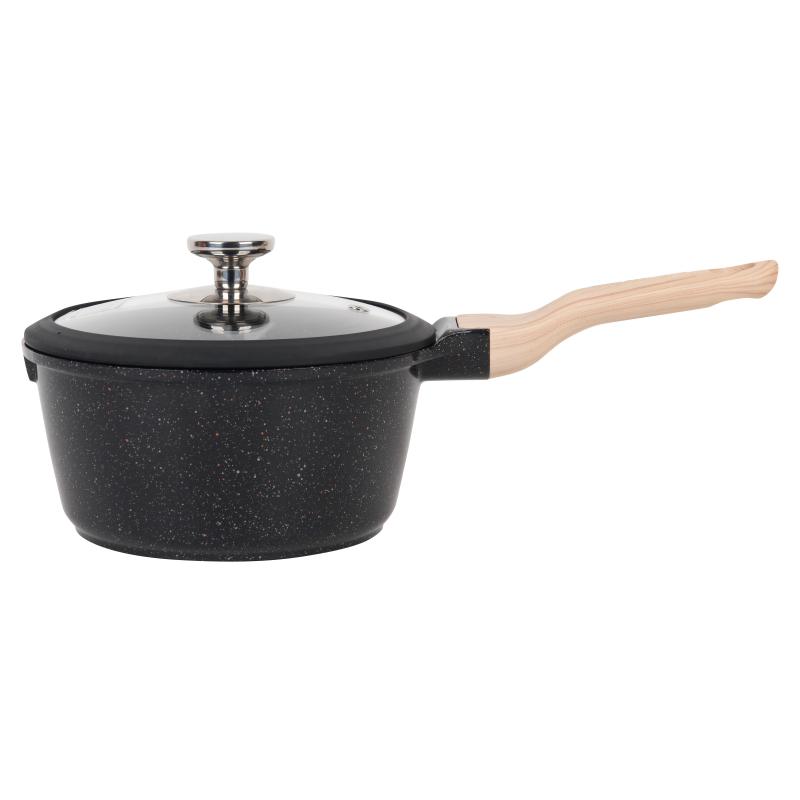
For most home cooks, a practical starting configuration includes:
- A 24cm non-stick frying pan — the everyday cooking workhorse for eggs, sautéed vegetables, and light proteins.
- A 26–28cm stainless steel or hard-anodized pan for searing, browning, and pan sauces.
- A 2–3 litre sauce pan with a glass lid — for sauces, grains, and vegetables.
- A 4–6 litre stockpot or casserole for soups, stews, and braising.
MGC cookware is designed with exactly this kind of everyday versatility in mind — die-cast aluminum non-stick pans, induction-compatible base options, and kitchen tools spanning multiple cooking categories. Whether you are outfitting a household kitchen or sourcing cookware for retail distribution, aligning your cookware selection with actual cooking methods is what makes the difference between a set that performs and one that accumulates.
Final Thoughts
Choosing cookware becomes straightforward once you anchor the decision in cooking method rather than brand names or price points. Identify what you cook most often, understand what material and construction that method requires, and evaluate products against those criteria.
Good cooking tips go hand in hand with the right kitchen tools. Even a high-quality non-stick pan will not help you achieve a proper sear, and even the most durable stainless steel skillet will frustrate you if you expect eggs to release cleanly without adequate technique and fat. Matching your cookware to your cooking methods is the single most practical step you can take to improve both your results and the working life of your equipment.
If you are still uncertain where to start, focus on the one or two cooking methods you rely on most frequently, choose the material that most closely fits those tasks, and add pieces to your collection as your cooking expands.