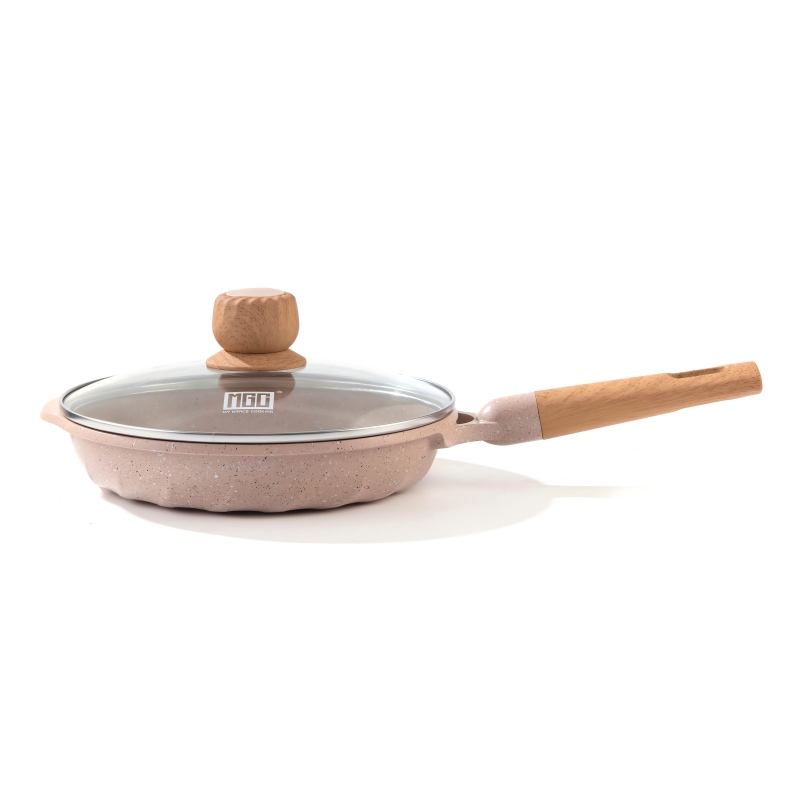
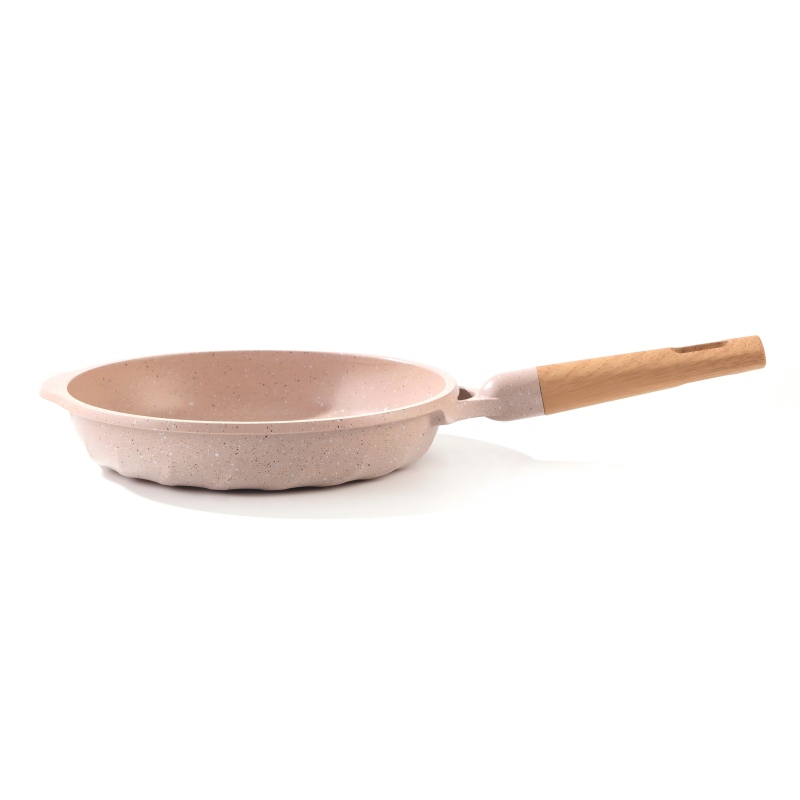
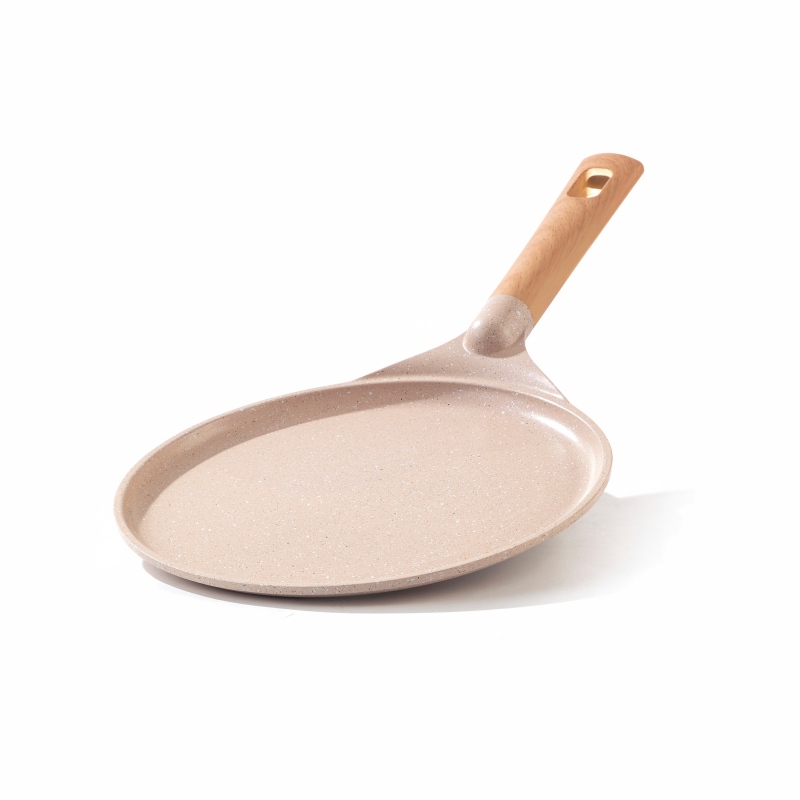
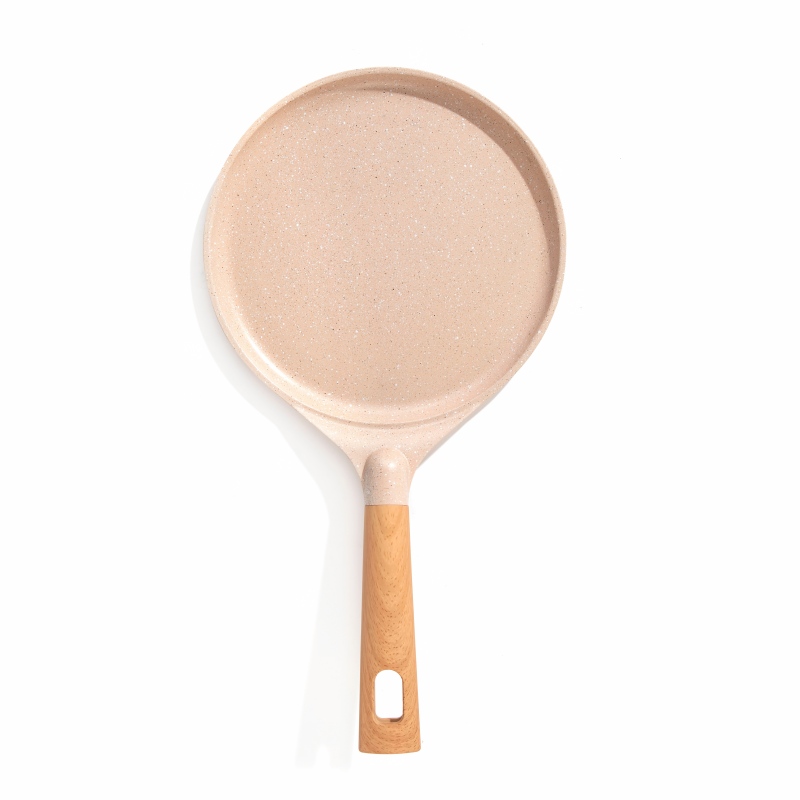
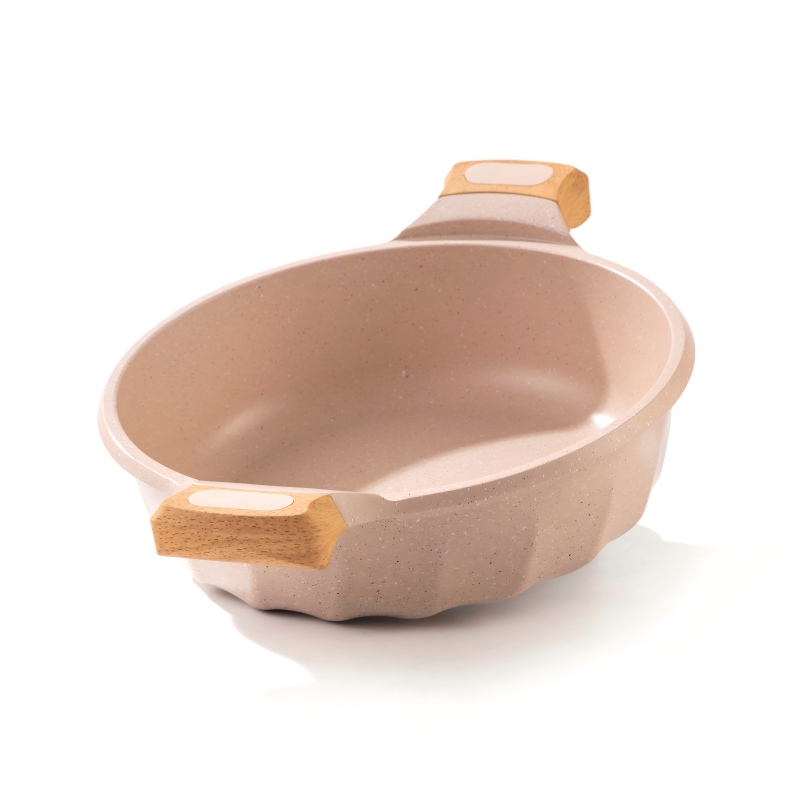
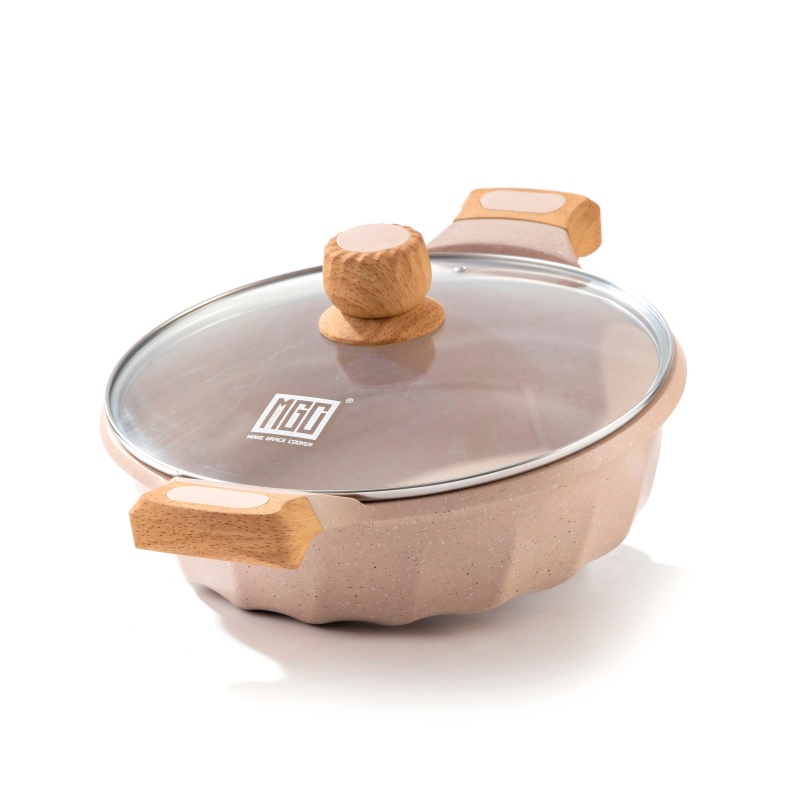
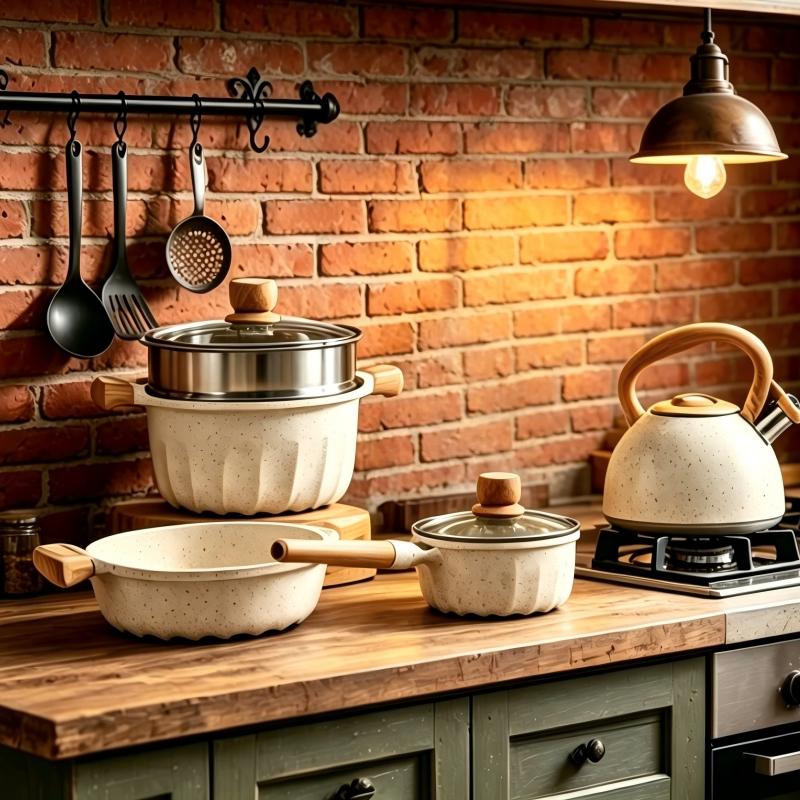
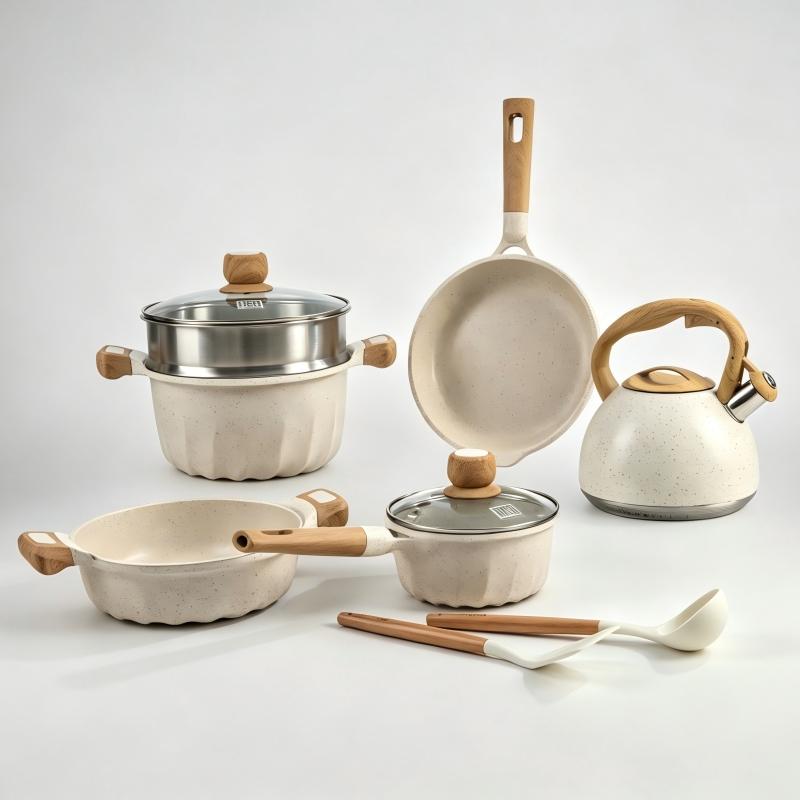
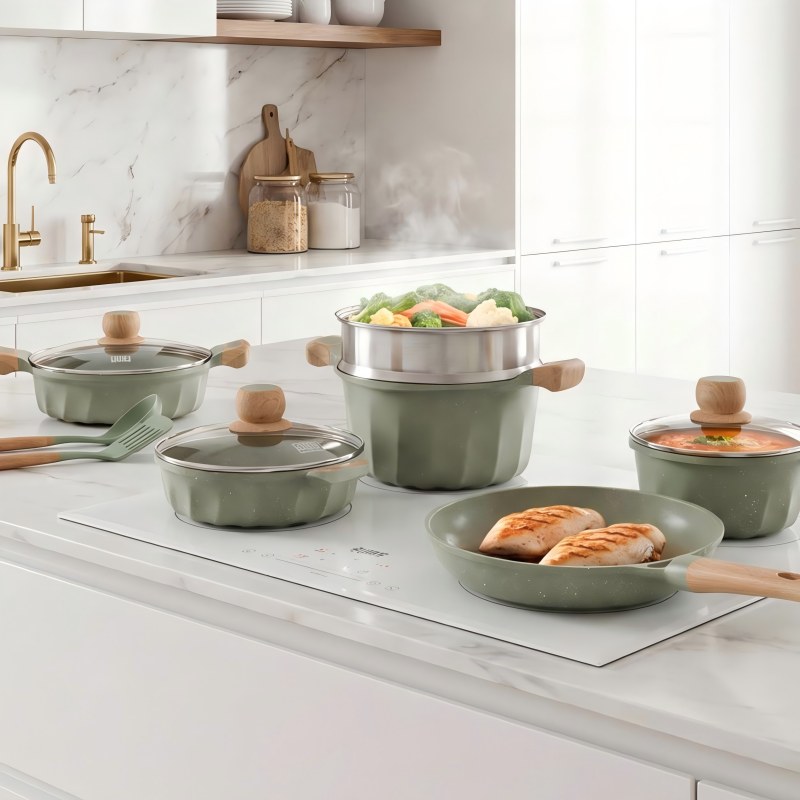
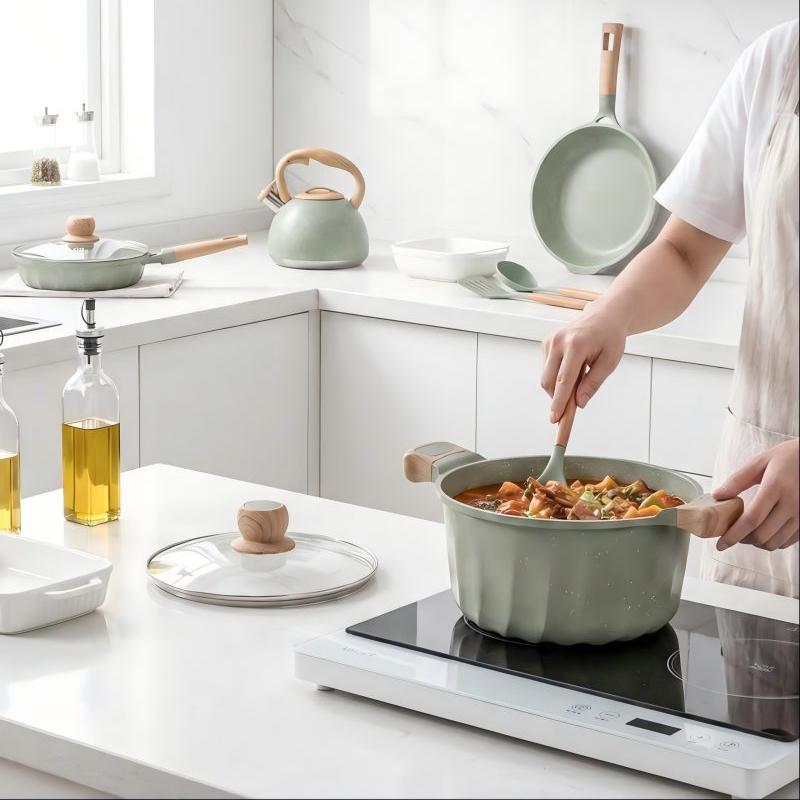
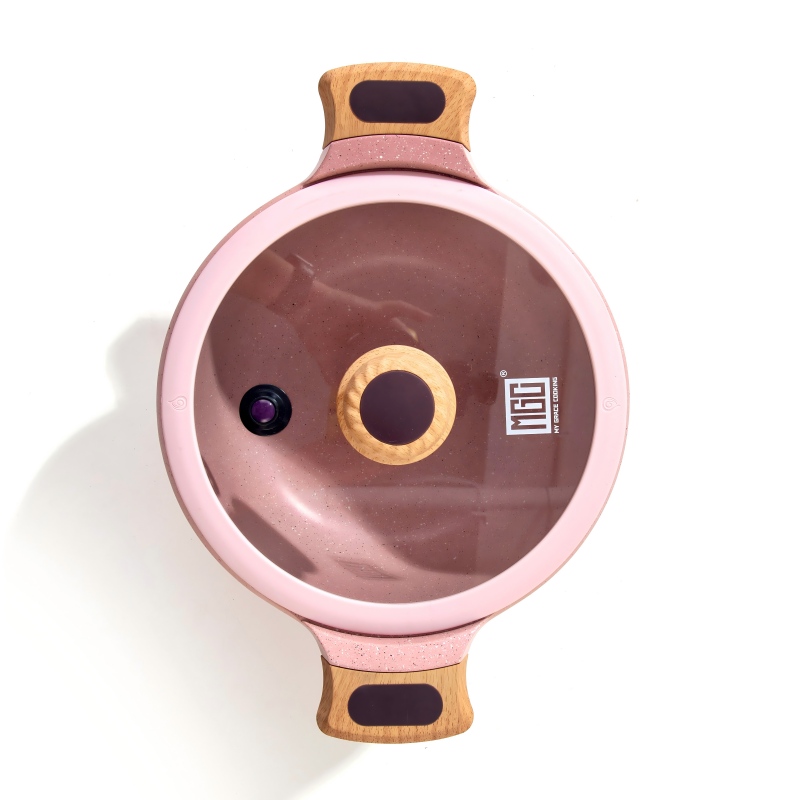
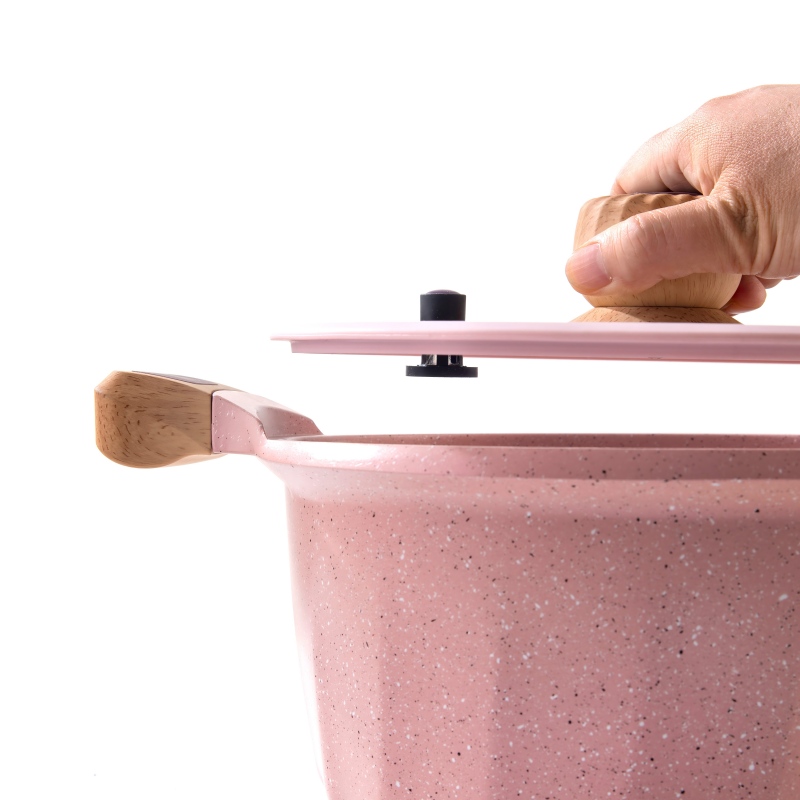
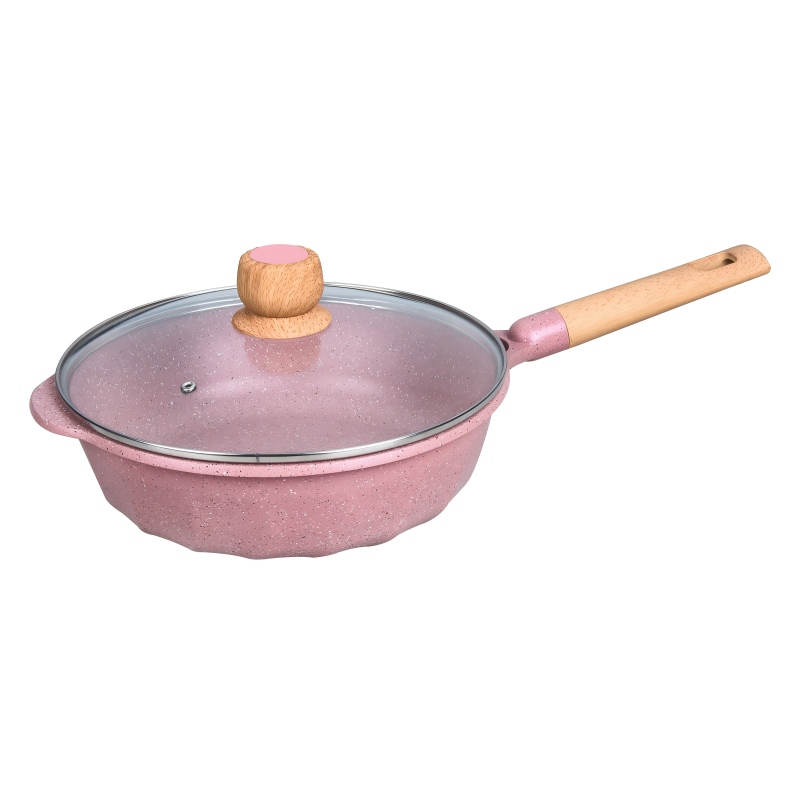
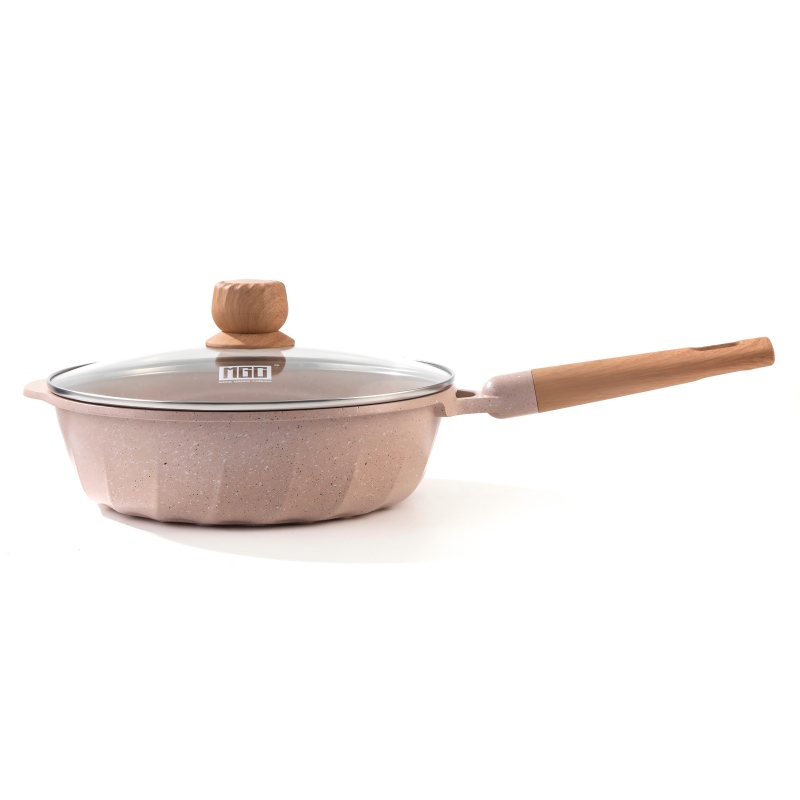
French cookware refers to a range of pots, pans, and cooking sets designed with French culinary tradition in mind — combining elegant curved silhouettes, balanced heat performance, and versatile functionality suitable for both everyday home cooking and more refined preparation techniques. The MGC French cookware collection brings together these defining characteristics in a lineup built for reliable daily use: from individual frying pans and sauté pans to stockpots, shallow pots, and complete multi-piece sets.
French-inspired cookware design carries significant aspirational value in both consumer and professional markets globally. Its aesthetic appeal and functional engineering have made it a preferred segment for mid-to-high-end retailers, gifting programs, and hospitality buyers who want cookware that performs well and presents well in equal measure.
The MGC French cookware range is built on integrated die-cast aluminum construction — a manufacturing approach that directly addresses one of the most common cookware challenges: uneven heat distribution. When sourcing pots and pans for mid-to-high-end retail distribution, the evaluation criteria go beyond aesthetics — we look at coating durability, structural rigidity, and whether the base construction can hold up across real-world use cycles.
French cookware serves multiple market segments and use contexts. Where it tends to perform best commercially:
Choosing within the French range depends on how the cookware will be used, who is buying it, and what the retail or wholesale context requires. A few considerations that tend to guide decisions at this stage:
Individual Pieces vs. Complete Sets: If daily French-style cooking is the primary use case, investing in a dedicated sauté pan or shallow pot makes more sense than defaulting to a general multi-piece set — but if the buyer is setting up a kitchen from scratch or looking for a complete, visually matched collection, the French 8-piece or 11-piece set is a practical starting point. Neither approach is universally better; it depends on the end user's cooking frequency, existing kitchen inventory, and budget range.
Die-Cast vs. Stamped Aluminum: Most buyers comparing mid-range non-stick cookware encounter this trade-off. Die-cast aluminum offers better heat uniformity and a longer service life but comes at a higher unit cost than stamped alternatives. If the retail price point allows, die-cast construction is the defensible recommendation for buyers who want to reduce the deformation and premature coating failure issues associated with thinner stamped pans — though for lower-frequency or transitional use, basic options remain a reasonable entry point.
Distinguishing Authentic French-Inspired Designs: Buyers evaluating premium cookware sometimes find it difficult to distinguish genuine French-inspired designs from generic pans with superficial aesthetic claims. The practical differentiation signals are construction method (die-cast vs. stamped), base thickness and weight, coating durability specifications, and whether the design proportions are consistent across the full product line — rather than relying on color or handle profile alone.
Food Safety and Certification: For export market distribution — particularly in markets with strong regulatory awareness — food contact safety certifications matter as a purchase confidence signal. Where applicable, buyers should confirm that cookware materials meet the relevant food contact safety standards for their target market (such as FDA food-grade or LFGB food contact categories). Certification categories should be verified directly rather than assumed from marketing descriptions alone.
For B2B buyers sourcing cookware for distribution in developing markets or specialty retail channels, the MGC French category offers a combination of characteristics that support both commercial placement and end-user satisfaction. The French line's design positioning creates a differentiating narrative that sets it apart from generic cookware at comparable price points — a distinction that matters as developing-market consumers increasingly upgrade from basic aluminum pots toward coated non-stick and design-led options.
The range covers multiple product types within a visually consistent design language, which supports shelf presentation, set merchandising, and gift packaging in ways that mismatched individual pieces cannot. I will acknowledge that die-cast cookware requires a higher wholesale investment per unit than stamped alternatives — but for buyers targeting mid-to-high-end retail positioning, the trade-off in structural quality, reduced return rate risk, and brand-aligned presentation is generally worth examining closely before defaulting to the lower-cost option.
Most buyers find that a well-matched French cookware set covers the majority of everyday cooking needs — though individual household setup, cooking culture, and price sensitivity might shift the optimal configuration up or down. The MGC French cookware range is designed to give wholesale and retail partners a product line that holds up against both aesthetic and functional evaluation criteria, at a price point accessible to developing-market distribution channels.
 EN