What Is European Ceramic Non-Stick Cookware?
European ceramic non-stick cookware refers to cookware sets and individual pieces designed in the tradition of European culinary craftsmanship, featuring a ceramic-based non-stick coating rather than conventional PTFE or PFOA-containing surfaces. The defining characteristic of the European ceramic category is a coating formulated without PFAS, PFOA, lead, or cadmium — positioning European cookware as a food-safe, health-conscious choice for everyday kitchen use.
Have you ever bought a European cookware set that performed well in the first few months, then started sticking unexpectedly? In many cases, that is not simply bad luck — it is a signal about coating composition and thermal management. European-style ceramic cookware addresses this directly by combining an inert mineral-based surface with a construction designed for sustained, consistent performance across repeated daily use.
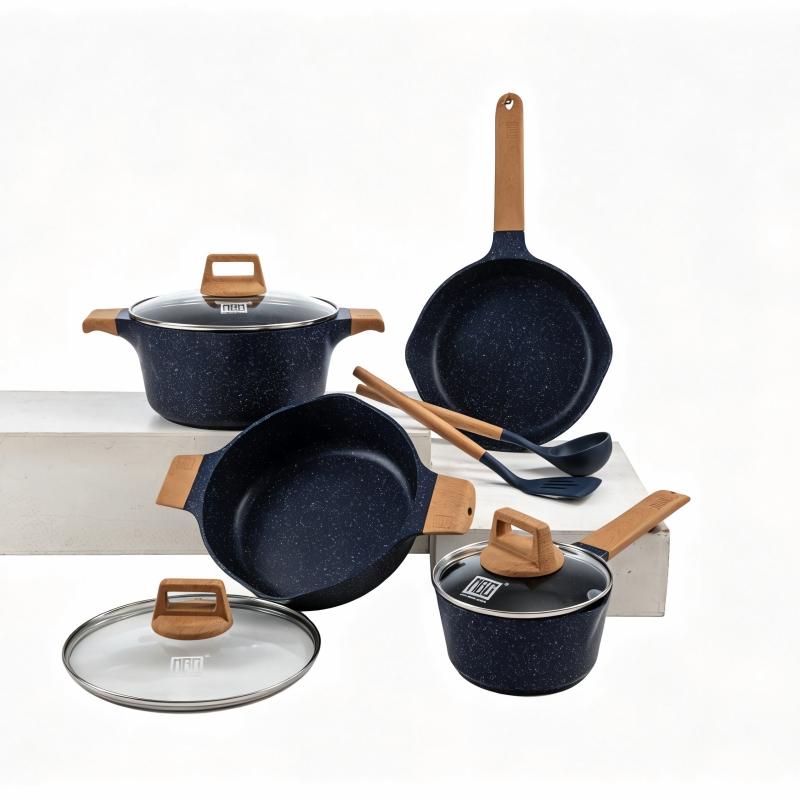
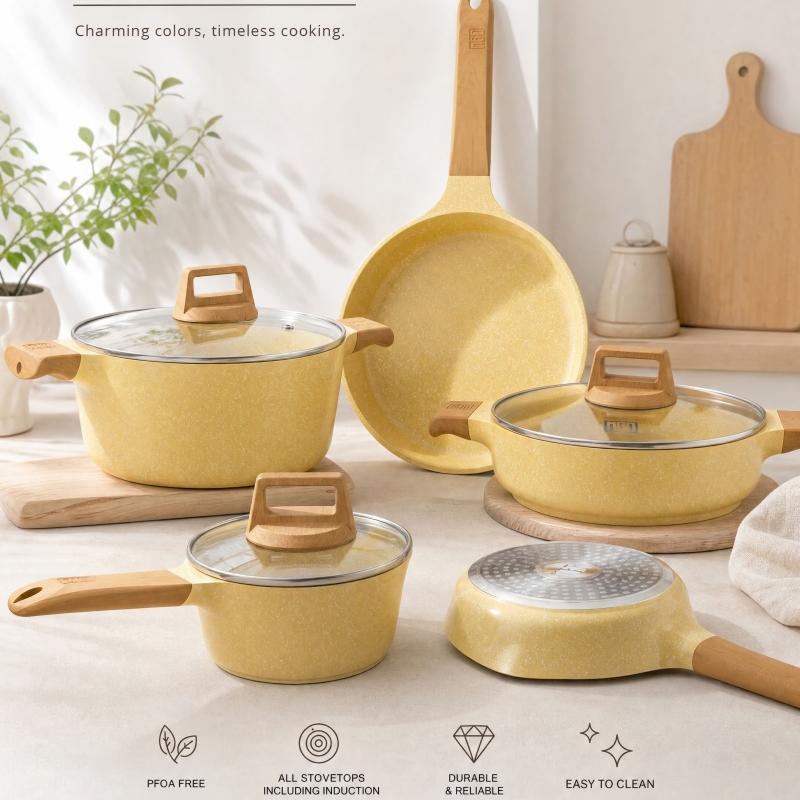
The European ceramic cookware category typically includes frying pans, saucepans, saute pans, stockpots, and full multi-piece European cookware sets designed to cover the complete range of everyday cooking tasks — from light sauteing to long simmering. The MGC European collection brings this design tradition to mid-to-high-end buyers in developing markets at a price point that bridges the gap between commodity cookware and premium European imports.
Key Characteristics of European Ceramic Cookware
-
PFAS-Free Coating: European ceramic cookware is formulated without PFAS, PFOA, lead, or cadmium. For health-conscious households — particularly those with young children or elderly family members — this is a critical baseline. In practice, a PFAS-free European ceramic surface means that even under repeated high-heat cooking, the coating does not release compounds associated with food contact safety concerns. As food contact safety standards tighten globally, PFAS-free European ceramic formulations have shifted from a differentiator to a minimum buyer expectation in informed markets.
-
All-in-One 9-Piece Set: The MGC European 9-piece cookware set covers simmering, braising, frying, and sauteing within a single unified European collection. Rather than purchasing individual pieces that may differ in thickness or coating quality, a matched European cookware set delivers consistent performance across every cooking task. Shifting from single-product purchasing to system thinking — considering what your entire kitchen requires — makes a well-configured European cookware set a more efficient investment than assembling a mixed collection incrementally over time.
-
Universal Stovetop Compatibility: The MGC European ceramic cookware collection is designed for use across gas, electric, and induction cooktops. This compatibility matters especially in households where the stovetop type varies or where a future kitchen upgrade is planned. European cookware with induction compatibility requires a magnetically responsive base material — not simply a marketing label — so this specification is worth confirming against product documentation before purchase.
-
Food-Safe Materials Throughout: Beyond the ceramic coating itself, the European cookware set is constructed with food-safe materials across the cooking surface, body, and handle components. This supports a wide range of European and global cooking applications, including tangy, acidic, and spice-forward dishes that interact more aggressively with lower-grade surfaces.
-
Capacity Range for Everyday Cooking: European ceramic cookware in a 9-piece configuration covers different capacity needs — from single-portion sauces to family-scale braises — within a single consistent European cookware system. This breadth is particularly relevant for buyers who need one reliable European cookware collection rather than maintaining multiple category-specific sets.
Common Applications for European Ceramic Cookware
European ceramic non-stick cookware performs reliably across a broad range of cooking methods. This European cookware category is especially suited for the following applications:
-
Simmering and braising: Longer, lower-heat cooking tasks where consistent heat distribution and retention matter. European ceramic cookware supports even surface contact and stable temperature management across extended simmering and braising sessions.
-
Frying and sauteing: The PFAS-free European ceramic surface allows eggs, fish, vegetables, and proteins to release cleanly without requiring excessive cooking oil — well-suited for health-aware everyday cooking in a European ceramic pan.
-
Tangy and spice-forward global cuisine: Acidic and spice-heavy ingredients perform better on food-safe European ceramic surfaces than on reactive lower-grade coatings. The MGC European set is specifically configured for tangy and spicy global cuisine, making it a practical choice for diverse cooking styles.
-
Multi-course meal preparation: With nine pieces covering different functions and capacities, the European cookware set supports preparing multiple dishes simultaneously — the practical advantage of a matched European cookware system over an assembled mix of individual pieces from different ranges.
Many buyers treat European ceramic and PTFE-based coatings as interchangeable — but European ceramic and PTFE coatings have different heat tolerance thresholds and wear patterns, which means one may suit your cooking habits better than the other. European ceramic surfaces generally perform best within moderate heat ranges, and understanding this distinction helps maintain consistent performance from the European cookware set over time.
How to Choose the Right European Cookware Set
Selecting the right European ceramic cookware set involves more than matching a budget figure. From a practical standpoint, the most useful questions are: what cooking techniques do you use most frequently, and does the European cookware set you are evaluating cover those tasks with appropriate piece sizes and configurations?
If your household cooks across diverse techniques — from quick stir-frying to slow braising — a full European ceramic cookware set designed for versatility is likely a better fit than investing in one specialized piece at a time. If your cooking is concentrated on one or two methods, a smaller European cookware selection may serve just as well. The key is matching the European cookware configuration to actual use patterns rather than purchasing based on piece count alone.
Practical evaluation criteria for European ceramic cookware include:
-
Coating safety documentation: PFOA-free and PFAS-free claims have become standard labeling in European and international cookware markets, but informed buyers increasingly look for European ceramic cookware products that support these claims with food contact safety documentation.
-
Stovetop compatibility confirmation: For induction compatibility, the European cookware base material must be magnetically conductive — verify this against the product specification rather than relying on marketing language alone.
-
Set configuration logic: A well-designed European ceramic cookware set should cover different capacity needs without redundancy. Evaluate whether each piece in the European set corresponds to a distinct cooking function or size requirement in your kitchen.
-
Construction quality signals: Handle stability, lid fit precision, and body gauge in European ceramic cookware all affect long-term durability. These factors show their value most clearly when the European cookware is used daily through repeated thermal cycles.
Why European Ceramic Cookware Matters for Mid-Range Buyers
The European cookware design tradition carries significant aspirational value across both consumer and professional markets globally. French and European culinary heritage has long set benchmarks for premium cooking performance, and European cookware designed within this tradition communicates quality positioning that resonates with buyers upgrading from basic commodity products.
For buyers in developing markets — where mid-range households are making deliberate choices to improve their kitchen quality — the European ceramic cookware category occupies a meaningful position. It offers genuine food-safe, health-conscious performance without requiring the budget typically associated with imported premium European brands. MGC positions the European line specifically to serve this segment: buyers who want reliable, PFAS-free European ceramic cookware that covers their complete cooking range, at a price point that reflects genuine value rather than the import margin.
In evaluating European cookware material performance, the most consistent long-term results come from products where coating composition, base construction, and recommended usage parameters are aligned. European ceramic non-stick surfaces perform best with moderate heat management and regular hand-washing care; when those conditions are followed, a quality European ceramic cookware set delivers food-safe, reliably non-stick performance across years of daily use.
As regulatory frameworks in key markets continue to tighten around food contact safety standards for non-stick coatings, buyers seeking European ceramic cookware that meets current health expectations while delivering European aesthetic and functional quality will find the PFAS-free European ceramic category to be the most relevant option available at this market tier.

 EN