EN
How Does Die Cast Aluminium Cookware Improve Cooking Performance?
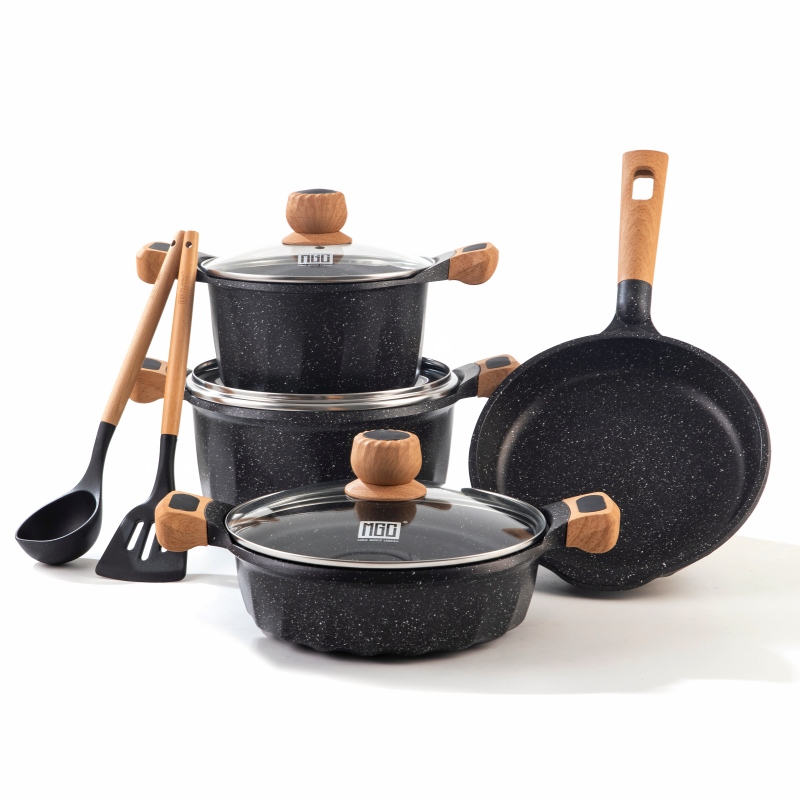
Having spent years evaluating cookware construction across price tiers and market segments, I find that the manufacturing process behind a pan matters just as much as the coating applied to it. Die cast aluminium cookware is one of the clearest examples of how the way a product is made directly shapes how it behaves in the kitchen. If you have been comparing cookware options and wondering whether the construction method really makes a difference, the short answer is yes — and the reasons are worth understanding before you invest in new kitchen tools.
What Is the Die-Casting Process and Why Does It Matter?
Die casting is a high-pressure manufacturing process in which molten aluminium is injected into a precision mould at elevated pressure. This creates a cookware body that is significantly denser and more dimensionally consistent than pans produced through simpler stamping or sheet-pressing methods. The result is a pan base with fewer micro-voids and irregularities — and this has a direct, measurable effect on how the pan heats and performs over time.
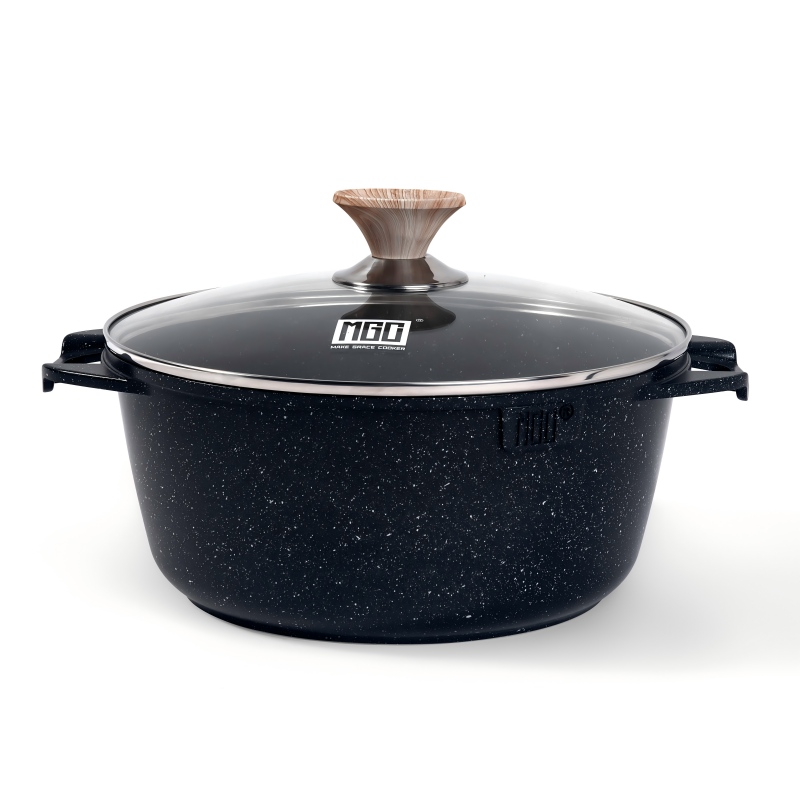
I used to evaluate cookware based mostly on price, until I started noticing a pattern: uneven browning across the surface of cheaper stamped pans, even when using identical heat settings. That observation pointed to inconsistent base thickness — a problem the die-casting process is specifically designed to eliminate. The uniform wall density in die cast aluminium cookware means heat moves through the base consistently rather than pooling in thinner sections.
Superior Thermal Conductivity for Even, Efficient Cooking
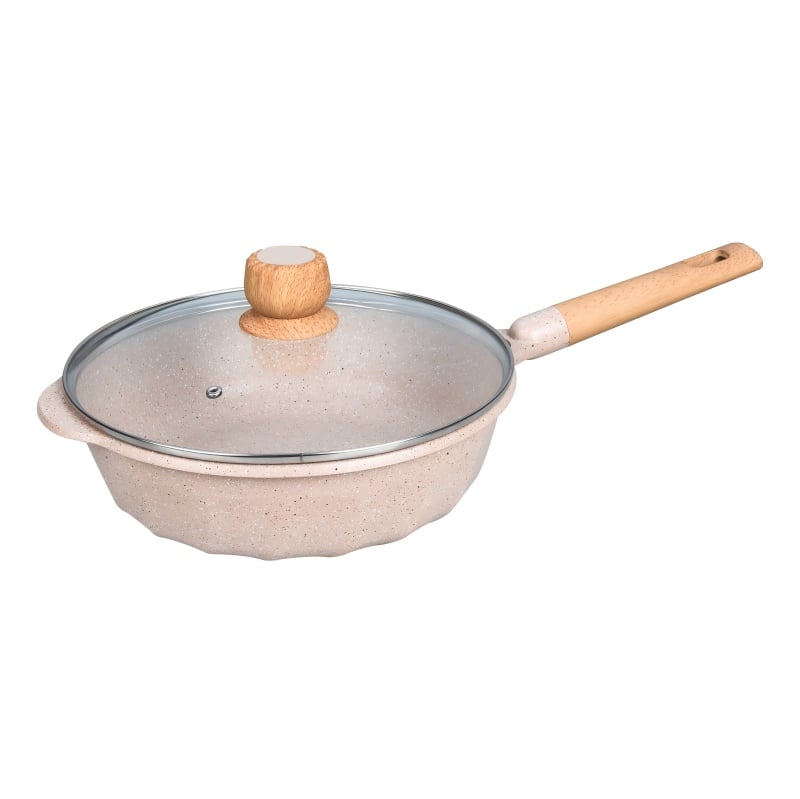
Aluminium is among the most efficient heat-conducting metals commonly used in cookware, with a thermal conductivity of approximately 205 W/(m·K) — significantly higher than stainless steel, which typically ranges between 15 and 25 W/(m·K). This gap in thermal conductivity explains why die cast aluminium cookware responds to temperature changes quickly and distributes heat across the entire cooking surface without requiring excessive energy input.
The thermal conductivity advantage translates to better cooking efficiency. If your cooking style involves frequent temperature adjustments — reducing a sauce and then quickly raising heat for a sear — die cast aluminium cookware responds faster and more predictably than heavier materials. The pan reaches cooking temperature with less waiting and maintains that temperature more evenly. Compared to cast iron, die cast aluminium is typically around 30% lighter and considerably quicker to respond to heat changes, offering a more manageable daily cooking experience without sacrificing performance.
It is worth being precise here: the heat distribution benefit depends on the base being thick and uniform enough to spread heat laterally before food contact. A die-cast base at an appropriate thickness achieves this; a thin stamped base at the same weight often does not.
Durable Construction Built for Regular Use
Durable cookware starts with structural integrity, and the die-casting process contributes to this directly. The high-pressure forming creates a compact, dense aluminium body that resists the warping and base deformation that sometimes occur in stamped pans after repeated exposure to high heat and thermal cycling. This matters most for home cooks who use their pans daily across different heat sources — gas, electric, ceramic, or induction.
In practice, I have found that recognising the role of maintenance is just as important as understanding construction quality. A well-built die cast aluminium pan will retain its structural performance for years, but that longevity also depends on how it is used and cared for. Avoiding thermal shock — placing a hot pan directly under cold water — preserves the base dimensional stability over time. The pan's construction gives it a strong foundation; how you treat it determines how long that foundation performs.
Non-stick coatings applied to die cast aluminium cookware typically last three to five years with regular use and proper care. The coating lifespan is separate from the structural lifespan of the aluminium body itself, which can remain serviceable significantly longer when treated appropriately. Understanding this distinction helps set realistic expectations and informs smarter buying decisions.
Lightweight Design Without Performance Trade-Offs
One of the consistent reasons home cooks value die cast aluminium cookware is its weight relative to performance. A well-constructed die cast pan delivers even heat distribution and structural durability at a fraction of the weight of cast iron alternatives. This difference matters during extended cooking sessions, where handle fatigue from a heavy pan can affect technique and precision.
For those who regularly work with multiple kitchen tools at once — managing a sauce pan, a frying pan, and a wok simultaneously — the manageability of each piece directly affects cooking outcomes. Lighter pans with reliable heat distribution allow for more controlled tossing, tilting, and plating movements without the cook compensating for equipment weight.
Non-Stick Capability That Supports Cooking Efficiency
Die cast aluminium cookware almost universally features a non-stick interior coating, and the quality of the coating application is partly dependent on the smoothness and consistency of the substrate beneath it. Because the die-casting process produces a more uniform interior surface than stamping, the non-stick coating can adhere more evenly across the full cooking area — including the sidewalls and the transition between base and wall where coating gaps are most common in lower-quality pans.
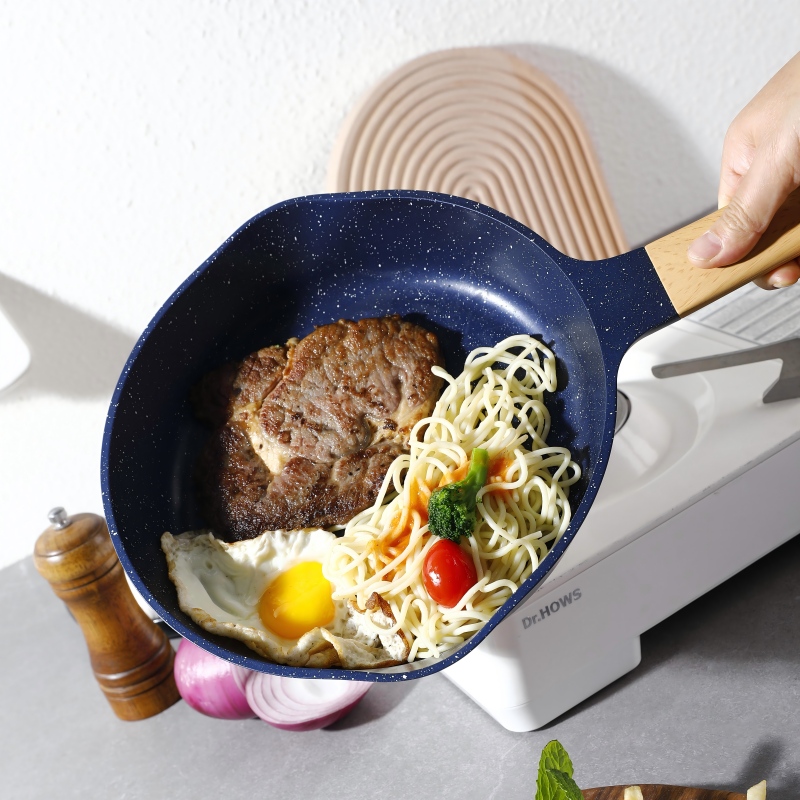
A consistent non-stick surface improves cooking efficiency in ways that go beyond easy food release. Eggs, fish, and delicate proteins cook with less oil, require fewer interventions, and are less likely to stick to problem areas in the pan. If you primarily cook at medium heat and use silicone or wooden utensils, a quality die cast aluminium non-stick pan should maintain its performance through the coating's expected lifespan.
Getting the Most from Die Cast Aluminium Cookware
Understanding what makes die cast aluminium cookware perform well also informs how to maintain it. Key practices that preserve both structural integrity and non-stick performance include: preheating gradually rather than starting on maximum heat; using silicone, wood, or nylon utensils to protect the coating surface; hand-washing with a soft cloth rather than abrasive pads; and allowing the pan to cool before washing to avoid base warping from sudden temperature change.
The value of die cast aluminium cookware is not just in the initial cooking performance — it is in the consistency of that performance over repeated use, which ultimately determines whether the pan justifies its place in your kitchen tools collection. Construction quality creates the baseline; maintenance sustains it.
Summary
Die cast aluminium cookware improves cooking performance through a combination of structural and material factors: the high-pressure casting process creates a structurally dense base with superior thermal conductivity, enabling even heat distribution and fast temperature response; the uniform base construction reduces hot spots and supports more reliable cooking outcomes across all heat sources; the relatively lightweight design improves day-to-day usability without sacrificing durability; and the smooth, consistent interior surface produced by die casting allows non-stick coatings to perform more evenly. For home cooks investing in durable cookware that performs reliably across a range of daily cooking tasks, understanding the construction advantages of die cast aluminium makes it easier to choose with confidence.