Non-Stick Cookware Coating Guide for B2B Buyers [2024]

Get up to 35% off + Free shipping Shop now

Call Us:+86-579-86903988

Buyer Insights on Non Stick Cookware Coating Quality

Buyer Insights on Non Stick Cookware Coating Quality

Nonstick cookware coating influences food release, cleaning convenience, and everyday cooking performance. MG Cookware helps buyers explore cookware options with attention to coating specifications, product construction, and intended applications. For example, a distributor comparing three frying pan models can assess surface consistency, recommended cooking temperatures, and cleaning instructions before selecting products for retail distribution. Coating performance depends on formulation, application methods, substrate preparation, and usage conditions. Buyers should request available technical documentation and relevant test reports rather than relying solely on appearance or marketing claims. By establishing clear specifications and inspection criteria before bulk orders, importers and private label brands can make informed purchasing decisions and communicate product features more accurately.
Get A Quote

Case Study

Coating Evaluation for Retail Cookware

Retailers need cookware with clearly documented features that match customer expectations for everyday meal preparation. When evaluating nonstick frying pans, purchasing teams should examine surface uniformity, coating specifications, cleaning guidance, and recommended heat settings. For example, a retailer comparing three pan sizes can use a consistent checklist to evaluate product appearance and available technical documentation. Sample inspections help identify visible inconsistencies before larger orders are placed. Buyers should also confirm whether performance claims are supported by relevant testing. By reviewing these factors systematically, retailers can select products with clearer specifications, prepare more accurate product descriptions, and provide customers with practical guidance for appropriate cookware use.

Coating Specifications for Private Label Brands

Private label cookware brands need coating specifications that align with product positioning, intended use, and applicable market requirements. Buyers should discuss available coating systems, substrate compatibility, application processes, and relevant testing documentation with their manufacturing partners. For instance, a brand developing a four product cookware collection can establish consistent requirements for surface appearance and documented performance. Before approving production, the team should review representative samples and clarify acceptance criteria. Food contact compliance documentation must also be verified for the destination market. This preparation helps purchasing teams communicate expectations, reduce avoidable revisions, and maintain a more consistent approach to product evaluation across the collection.

Coating Performance for Everyday Cooking

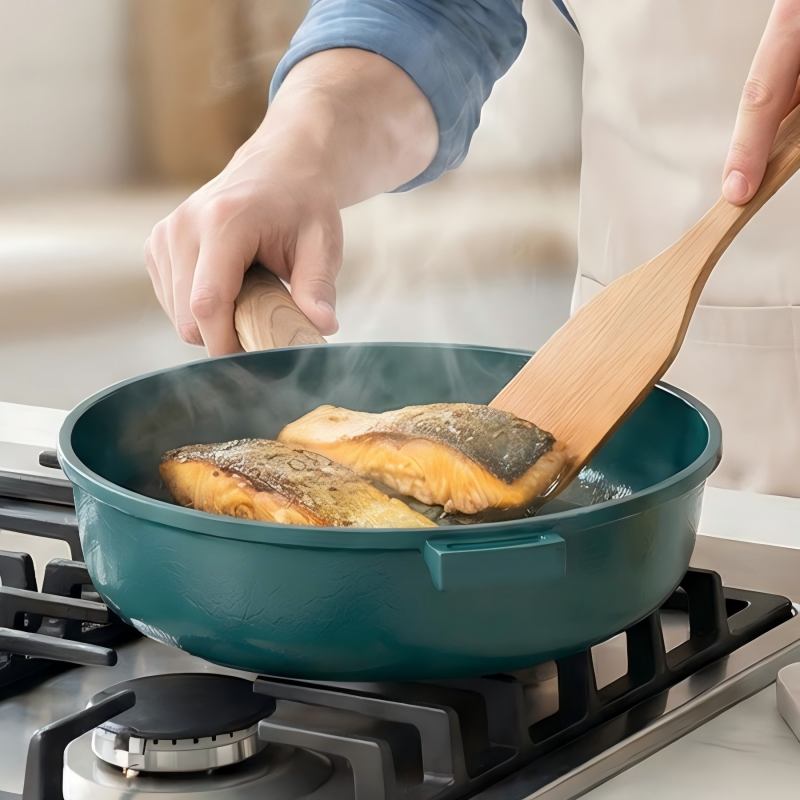
Nonstick coatings are commonly selected for preparing eggs, pancakes, fish, and other foods that can adhere to cooking surfaces. Actual performance depends on the coating system, cookware construction, heat control, utensils, and cleaning practices. For example, a distributor supplying household cookware can compare two frying pan models by reviewing their specifications, cooking recommendations, and available test results. Buyers should confirm whether metal utensils are permitted and follow the manufacturer's care instructions. Excessive heat and abrasive cleaning may shorten coating life. Clear product guidance helps retailers explain appropriate use, manage customer expectations, and select cookware suited to the needs of their target markets.

Related products

Nonstick cookware coating is an important consideration for cookware manufacturers, importers, distributors, and private label brands. Different coating systems offer distinct characteristics, so selection should reflect cooking applications, substrate materials, manufacturing processes, and applicable food contact requirements. MG Cookware provides a starting point for buyers exploring nonstick cookware products and their specifications. When evaluating products, purchasing teams should request coating information, available technical data sheets, relevant performance test reports, and recommended care instructions. For example, a buyer sourcing three frying pan models can compare documented surface characteristics and intended cooking conditions before choosing an assortment. Coating performance depends on formulation, surface preparation, application quality, heat exposure, utensils, and cleaning practices. Buyers should therefore avoid assuming that all nonstick coatings provide identical durability or performance. Before approving bulk orders, confirm sample quality, inspection criteria, product labeling, and compliance documentation relevant to the destination market. A structured evaluation process helps businesses compare products objectively, communicate accurate specifications, and select cookware suited to their commercial requirements.

Frequently Asked Questions

What types of coatings are used on nonstick cookware?

Common options include PTFE-based coatings and ceramic-based nonstick coatings. Their properties, application requirements, and performance characteristics differ by formulation and product design. Buyers should review the manufacturer's specifications, intended use, applicable safety documentation, and care instructions before selecting cookware for a particular market.
Request technical specifications, relevant adhesion or abrasion test reports, and representative product samples. Inspect surface consistency and confirm recommended cooking temperatures and cleaning methods. Testing should correspond to the actual product and intended use. Written acceptance criteria help purchasing teams evaluate samples before bulk production.
No. Ceramic-style nonstick coatings generally use different coating formulations from conventional PTFE-based systems. Their performance and maintenance requirements vary by product. Buyers should confirm the exact coating technology and review supporting documentation rather than assuming that either category automatically offers superior durability or safety.
Follow the manufacturer's instructions for heat settings, utensils, cleaning, and storage. Avoid overheating empty cookware and using abrasive cleaning materials unless expressly permitted. Appropriate care can help preserve coating performance. Retailers should provide accurate guidance because recommended practices vary with the coating system and cookware design.
Request coating specifications, material information, relevant performance reports, and food contact compliance documentation applicable to the destination market. Confirm that the documents identify the relevant product and intended application. Buyers should also clarify labeling requirements and review sample quality before approving commercial production.

Related article

New Market Promotion

25

Aug

New Market Promotion

Struggling to demonstrate product value? Face-to-face customer engagement drives 3.2x higher conversion in B2B markets. Discover proven field promotion tactics now.
View More

How to Choose the Right Pan Size for Different Cooking Needs?

14

Sep

How to Choose the Right Pan Size for Different Cooking Needs?

Find the right pan size for your kitchen. Covers key criteria — from cooking portions to frying techniques — to help you choose smarter.
View More
Proper Cleaning Methods to Extend the Life of a Durable Non Stick Pan.

18

Sep

Proper Cleaning Methods to Extend the Life of a Durable Non Stick Pan.

Learn proper cleaning methods to extend your durable non stick pan's life. Right kitchen habits protect the coating and keep food releasing cleanly.
View More
How to Extend the Lifespan of Your Cookware Through Proper Use?

18

Sep

How to Extend the Lifespan of Your Cookware Through Proper Use?

Learn how to extend the lifespan of your cookware through proper use, smart cooking habits, cleaning methods, and everyday kitchen care tips.
View More

Customer Testimonials

Michael Turner

Comparing three cookware samples helped our team evaluate coating appearance, surface consistency, and cleaning requirements, supporting better product selection for our retail assortment.

Sarah Mitchell

Reviewing coating documentation and four product samples helped us clarify performance expectations and select cookware suited to everyday household cooking applications.

Get a Free Quote

Our representative will contact you soon.
Email
Mobile/WhatsApp
Name
Company Name
Message
0/1000
Technical Evaluation Before Bulk Purchasing

Technical Evaluation Before Bulk Purchasing

A structured coating evaluation helps buyers assess product suitability before committing to commercial quantities. Purchasing teams should review coating type, substrate compatibility, surface appearance, recommended heat limits, and available performance documentation. For example, an importer comparing three frying pan models can use a checklist to record specifications and identify differences between samples. Relevant adhesion, abrasion, or food contact test reports may provide additional evidence when available and appropriate. Buyers should confirm that reported results apply to the actual product rather than a different coating formulation. Sample approval and written acceptance criteria also improve communication between purchasing teams and manufacturers. This process supports informed product selection and reduces reliance on unsupported coating performance claims.
Coating Care and Everyday Cooking Performance

Coating Care and Everyday Cooking Performance

Nonstick coating performance depends on more than the coating material alone. Surface preparation, application quality, cookware construction, cooking temperatures, utensils, and cleaning methods can all influence results. For example, retailers supplying frying pans for household use should provide clear instructions about suitable heat settings, recommended utensils, and cleaning practices. Buyers should confirm these instructions with the manufacturer before publishing product information. Excessive heat and abrasive cleaning can damage some nonstick surfaces, while appropriate maintenance can help preserve their intended functionality. Clear care guidance supports realistic customer expectations and helps differentiate products according to documented features. For distributors and private label brands, accurate instructions are an important part of responsible product communication.
Compliance Documentation for International Markets

Compliance Documentation for International Markets

Coating compliance is an important consideration when supplying cookware to international markets. Buyers should identify the regulatory requirements applicable to their destination and request relevant food contact documentation from the manufacturer. For example, an importer preparing a three model cookware collection should verify that supporting documents correspond to the actual materials, coating system, and intended application. Depending on the market, additional testing, declarations, or labeling information may be necessary. A supplier's general statement of compliance should not replace verification of relevant product-specific evidence. Buyers should establish documentation requirements before production and retain appropriate records for purchasing and distribution. This preparation supports more responsible sourcing, clearer communication, and better alignment with market-specific requirements.