EN
Nonstick Cookware Coating Types and Their Differences.
When a distributor compares nonstick cookware, the label on the carton rarely tells the whole story. “Ceramic,” “stone-effect,” “multi-layer,” and “PTFE-free” may describe useful features, but they do not by themselves define release performance, expected service life, or the consistency a retailer will see from one shipment to the next. The useful comparison starts with coating chemistry, then moves to coating architecture, the pan body, and the way the finished item will be used.
That distinction matters in B2B buying. Two frying pans can both be positioned as nonstick cookware yet feel very different in use because their coating technology, surface preparation, layer build, and cookware materials are not the same. This guide explains the main families in practical terms and gives buyers a clearer specification conversation to have with a supplier.
First, separate coating type from the whole pan
A coating is the release surface. It is not the entire product. The base material influences heat response and flatness; the handle and construction influence handling; and the coating system influences release, cleaning behavior, and how the surface responds to the intended cooking routine. Treating a headline material as a complete quality judgment is an easy mistake.
For example, a die-cast aluminum body can offer a substantial-feeling platform for a coating, while an induction-compatible base is a separate construction decision. Neither feature proves that a particular coating will last longer. The better question is: what system is being specified, and how is it controlled from sample approval through repeat production?
The main nonstick cookware coating families
PTFE-based coatings
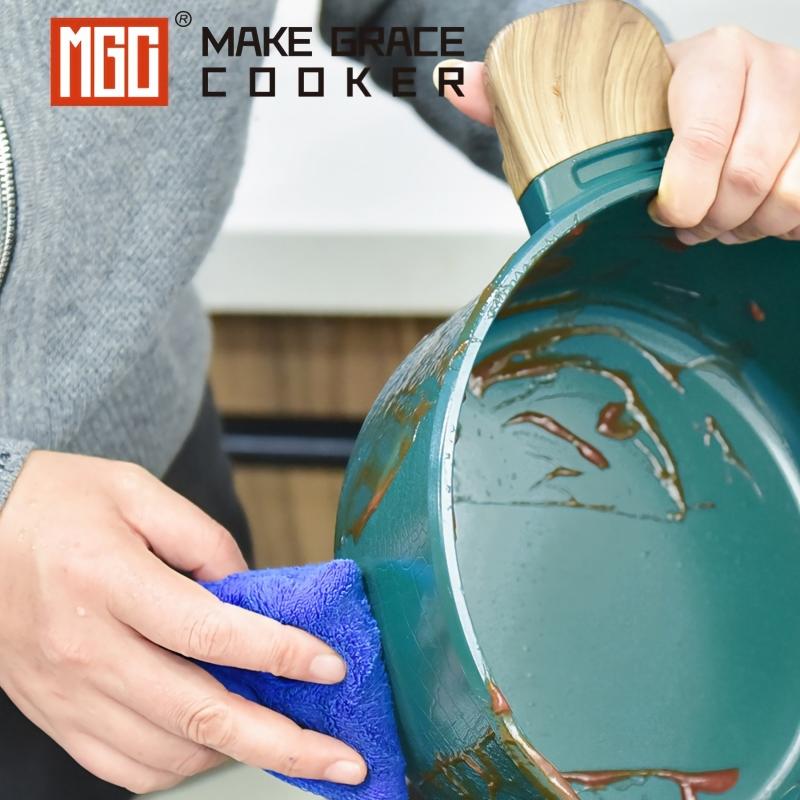
PTFE-based systems are a long-established category in nonstick cookware. They are valued for easy food release at normal household cooking temperatures and are often offered as one-, two-, or multi-coat systems. In simple terms, a multi-layer system may use different layers to help adhesion to the prepared pan, build body, and create the finished release surface. The number of coats is only one part of the picture; formulation, surface preparation, cure control, thickness targets, and use conditions also matter.
Buyers should avoid treating broad claims as interchangeable. “PFOA-free,” for instance, is not a complete description of the coating chemistry or of every production control behind a pan. The U.S. Food and Drug Administration describes polymerized coatings used for nonstick food-contact applications as applied at high temperatures and tightly bound to cookware; that context is useful, but it should not replace product-specific documentation, intended-use guidance, and local-market compliance review.
Sol-gel ceramic coatings
Ceramic nonstick surfaces commonly use a sol-gel coating technology rather than a traditional PTFE-based system. They are often selected when a range needs a PTFE-free positioning. In retail communication, this can be a meaningful distinction, but it is still not a promise that every ceramic-coated item will cook or age the same way.
For a buyer, the practical questions are whether the surface has the release level expected for the target menu, how the finish behaves with the recommended utensils and cleaning routine, and how consistently the factory controls the visual appearance. Color, gloss, texture, and coverage matter alongside release. Ceramic positioning should be supported by the supplier’s actual specification rather than a generic “healthier” claim.
Reinforced and mineral-effect coating systems
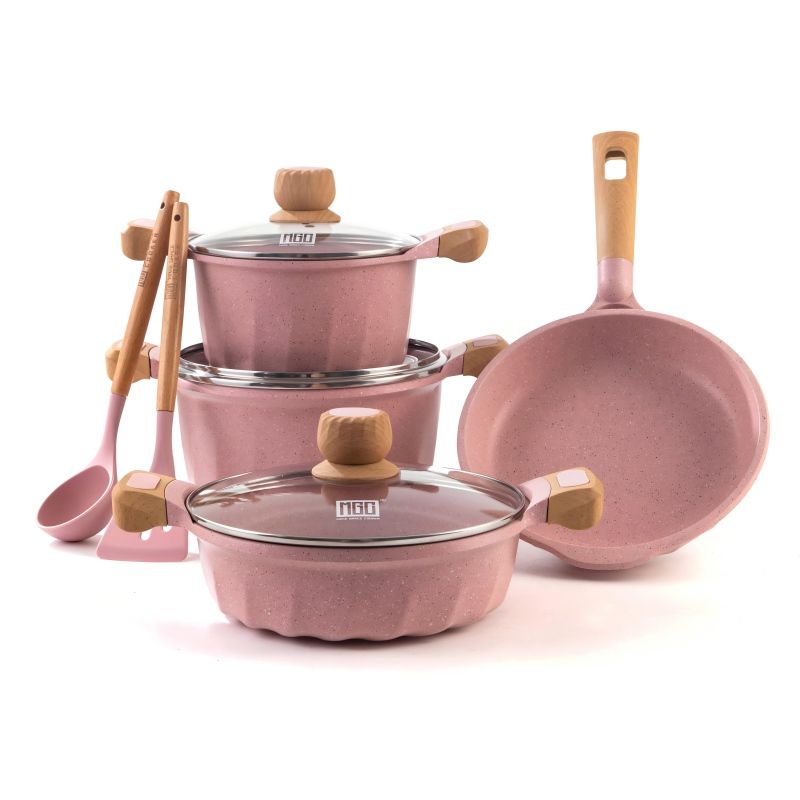
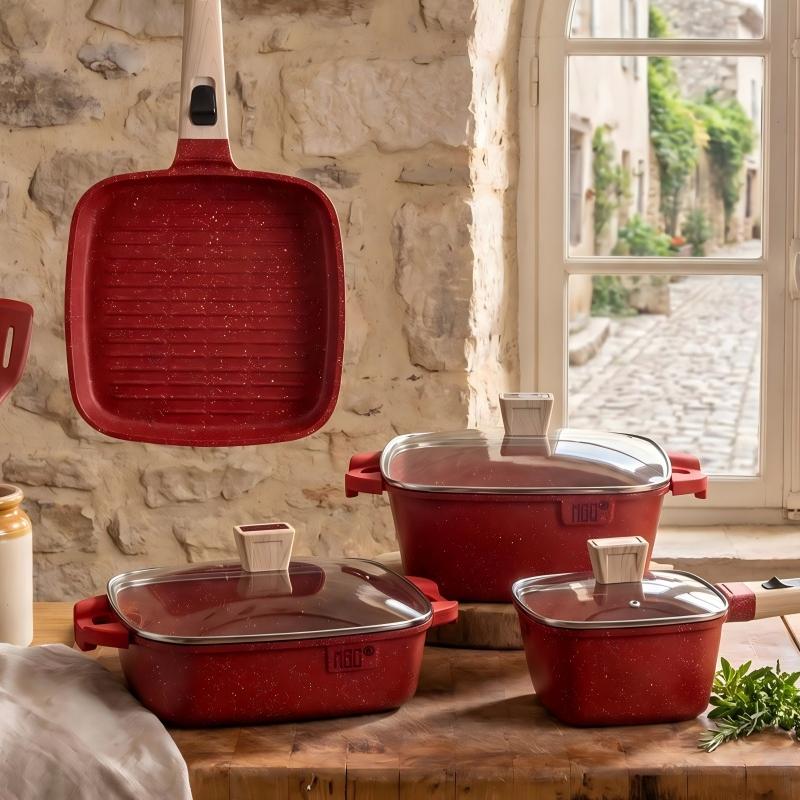
Some nonstick cookware ranges use reinforced formulations or visual treatments described as granite, stone, marble, or mineral effect. These names can refer to appearance, included particles, or a brand’s own coating platform. They are not a universal material standard. A stone-look pan may sit on a PTFE-based system, a ceramic system, or another proprietary construction.
That is why a purchasing brief should ask for the underlying chemistry and the intended performance standard, not just the finish name. If a distributor is building a coordinated range, a textured or mineral-effect surface can support shelf differentiation. It should be evaluated with samples under the planned usage instructions, because the cooking tools packaged or recommended with the range can affect surface wear.
Why similar coating labels can perform differently
| Factor | What it changes | What to ask |
|---|---|---|
| Pan-body preparation | How well the coating can anchor to the substrate | What preparation and inspection controls are used before coating? |
| Layer architecture | Balance of adhesion, build, appearance, and release | Is the system single-, dual-, or multi-coat, and what is the target specification? |
| Cookware materials | Heat response, weight, and the platform under the coating | What is the body construction and, where relevant, the induction-base design? |
| Use instructions | How a surface is exposed to heat, utensils, and cleaning | What care guidance will appear on packaging and in the user leaflet? |
| Batch control | Whether repeat orders match the approved sample | Which appearance and functional checks are recorded for each production batch? |
This is where kitchen innovation becomes practical rather than promotional. New textures, colors, coating platforms, and base constructions can create a differentiated range, but the commercial value comes from a specification that can be inspected and repeated.
A comparison framework for distributors
- Start with the channel and user. A value-oriented set, an everyday family range, and a premium gift-box line may need different visual finishes, price structures, and care messages.
- Request a clear coating description. Ask whether the system is PTFE-based, sol-gel ceramic, or another defined platform. Do not rely on “stone” or “granite” as the complete answer.
- Align the pan body with the claim. Confirm dimensions, weight range, base construction, and compatibility claims separately from the coating.
- Approve samples against a written checklist. Look at coverage, rim appearance, color consistency, handle fit, base flatness, and the care instructions that will accompany the product.
- Plan repeat-order controls. Agree on the sample reference, acceptable visual variation, packaging language, and incoming checks before the first production order.
This approach is especially useful when the same factory is asked to develop several price tiers. The aim is not to rank one coating family as universally superior. It is to match a defined nonstick cookware system to a target user, retail promise, and quality-control plan.
How to communicate coating claims responsibly
Clear wording protects both the distributor and the end user. Use the supplier’s verified chemistry and compliance documents for market-facing claims. State care instructions plainly: avoid using a pan beyond its intended heat setting, do not assume every surface is suitable for every utensil or cleaning method, and replace items that are materially damaged according to the seller’s guidance. These are more useful messages than vague “non-toxic” or “lasts forever” language.
It is also sensible to keep coating claims separate from broader sustainability claims. A durable product program may involve repeatable quality, sensible packaging, repairable components where applicable, and accurate consumer guidance. One coating label alone cannot establish all of that.
The bottom line
The differences among nonstick cookware coating types are real, but the label is only the first layer of the decision. PTFE-based systems, sol-gel ceramic systems, and reinforced or mineral-effect finishes each create different positioning options. Their real-world result depends on the complete build: coating technology, cookware materials, manufacturing control, and how the pan is used. For a distributor, the strongest buying decision is a documented specification, an approved sample, and a repeatable inspection plan—not a marketing term on its own.