Cleaning Non-Stick Pans: B2B Care Guide for Retailers & Distributors

Get up to 35% off + Free shipping Shop now

Call Us:+86-579-86903988

Simple Cleaning for Everyday Nonstick Cookware

Simple Cleaning for Everyday Nonstick Cookware

Cleaning non stick pans correctly helps remove grease, cooking residue, and food particles without unnecessary wear on the coated surface. For cookware brands, retailers, and distributors, practical care guidance can improve the overall product experience. A routine using warm water, mild dish soap, and a soft sponge is suitable for many nonstick pans. Allowing cookware to cool before washing also helps avoid damage caused by sudden temperature changes. For stubborn residue, soaking the pan can soften deposits and reduce the need for forceful scrubbing. Steel wool, abrasive pads, and harsh chemical cleaners should generally be avoided unless the product instructions specifically allow a particular cleaning method. MGC Cookware provides cookware options for B2B buyers to explore. Buyers should confirm each model's coating details, cleaning recommendations, and dishwasher suitability before preparing product information or placing wholesale orders.
Get A Quote

Case Study

Helping Retail Customers Care for Nonstick Pans

A homeware retailer wants to help customers maintain nonstick pans after purchase. The retailer creates a care guide explaining how to let cookware cool, wash it with mild dish soap, and use a soft sponge instead of abrasive scrubbers. For dried food residue, the guide recommends soaking the pan in warm, soapy water before cleaning. It also reminds customers to check the product label before placing cookware in a dishwasher. These instructions help shoppers understand routine maintenance and avoid common cleaning mistakes. When sourcing products from MGC Cookware, the retailer can request model specific care information to ensure that its guidance matches the selected cookware.

Supporting Distributors with Product Care Information

A kitchenware distributor supplies nonstick cookware to independent stores and regional retail chains. Customers frequently ask how to remove stuck food, clean greasy surfaces, and prevent scratches. The distributor prepares consistent product guidance based on each model's specifications and manufacturer recommendations. Its materials explain the importance of gentle cleaning, thorough rinsing, and complete drying before storage. Dishwasher use is addressed separately for products with different care requirements. By confirming cleaning instructions with its cookware supplier, the distributor can give retail partners more reliable information and reduce confusion across its product range. MGC Cookware can be contacted to confirm available models and relevant care details.

Improving Ecommerce Cookware Product Listings

An ecommerce seller wants its cookware listings to answer common questions before customers make a purchase. Alongside pan dimensions, coating information, and cooking applications, the seller adds a dedicated cleaning section. It explains how to remove everyday grease, soak stubborn residue, and avoid abrasive tools that may damage the surface. The seller also clarifies that dishwasher compatibility depends on the selected model. This information helps customers understand maintenance requirements and compare cookware more effectively. Before publishing listings for MGC Cookware products, the seller should confirm the exact product specifications and care instructions to avoid unsupported claims about cleaning or coating performance.

Related products

Cleaning non stick pans correctly helps remove grease, cooking residue, and food particles without unnecessary wear on the coated surface. For cookware brands, retailers, and distributors, practical care guidance can improve the overall product experience. A routine using warm water, mild dish soap, and a soft sponge is suitable for many nonstick pans. Allowing cookware to cool before washing also helps avoid damage caused by sudden temperature changes. For stubborn residue, soaking the pan can soften deposits and reduce the need for forceful scrubbing. Steel wool, abrasive pads, and harsh chemical cleaners should generally be avoided unless the product instructions specifically allow a particular cleaning method. MGC Cookware provides cookware options for B2B buyers to explore. Buyers should confirm each model's coating details, cleaning recommendations, and dishwasher suitability before preparing product information or placing wholesale orders.

Frequently Asked Questions

What is the best way to clean non stick pans?

Let the pan cool before washing it with warm water, mild dish soap, and a soft sponge or cloth. Rinse away soap residue and dry the pan thoroughly. Avoid abrasive scrubbers and harsh cleaners that may scratch or deteriorate the nonstick surface.
Soak the cooled pan in warm, soapy water until the food residue softens. Then gently wipe it away with a soft sponge or suitable brush. Avoid scraping with metal tools. If residue remains, check the manufacturer's instructions before using stronger cleaning methods.
Baking soda is sometimes used for stubborn residue, but its suitability depends on the pan's coating and care instructions. Abrasive rubbing can damage some surfaces. Start with warm, soapy water and gentle cleaning, and consult the manufacturer before applying additional cleaning agents.
Dishwasher suitability varies by model and coating. Check the product label or manufacturer's instructions before machine washing. Hand washing with mild dish soap and a soft sponge is generally a gentler option for maintaining many nonstick surfaces over time.
B2B buyers should request product specifications and cleaning guidance for each model, including recommended cleaning tools, dishwasher compatibility, and coating care. MGC Cookware can be contacted to confirm current product details and wholesale options before retailers prepare product listings or customer care materials.

Related article

New Product Development

25

Aug

New Product Development

Struggling to sustain market relevance? Our proven 5-step new product development framework helps B2B teams launch winning solutions faster. Get the playbook now.
View More
Proper Cleaning Methods to Extend the Life of a Durable Non Stick Pan.

18

Sep

Proper Cleaning Methods to Extend the Life of a Durable Non Stick Pan.

Learn proper cleaning methods to extend your durable non stick pan's life. Right kitchen habits protect the coating and keep food releasing cleanly.
View More
Proper Cleaning Methods to Extend the Life of a Durable Non Stick Pan.

18

Sep

Proper Cleaning Methods to Extend the Life of a Durable Non Stick Pan.

Learn proper cleaning methods to extend your durable non stick pan's life. Right kitchen habits protect the coating and keep food releasing cleanly.
View More
How to Extend the Lifespan of Your Cookware Through Proper Use?

18

Sep

How to Extend the Lifespan of Your Cookware Through Proper Use?

Learn how to extend the lifespan of your cookware through proper use, smart cooking habits, cleaning methods, and everyday kitchen care tips.
View More

Customer Testimonials

Kitchenware Retail Buyer

Our customers appreciate cookware that is easy to clean after everyday meals. Clear maintenance instructions help them remove food residue gently and care for nonstick surfaces with confidence.

Cookware Distribution Manager

Providing clear cleaning recommendations helps customers understand how to maintain their cookware. Gentle washing methods and model specific care instructions are valuable additions to a cookware product range.

Get a Free Quote

Our representative will contact you soon.
Email
Mobile/WhatsApp
Name
Company Name
Message
0/1000
Gentle Cleaning Protects Nonstick Surfaces

Gentle Cleaning Protects Nonstick Surfaces

A gentle cleaning routine helps remove daily grease and food particles without unnecessary abrasion. Warm water, mild dish soap, and a soft sponge are suitable starting points for many nonstick pans. Allowing the pan to cool before washing also reduces the risk of damage from sudden temperature changes. For retailers and cookware distributors, explaining these basic steps can make product care easier for customers to understand. Because coating materials and product designs differ, cleaning recommendations should always follow the instructions for the exact cookware model. Buyers working with MGC Cookware should confirm the appropriate care guidance before publishing product information.
Practical Methods for Stubborn Food Residue

Practical Methods for Stubborn Food Residue

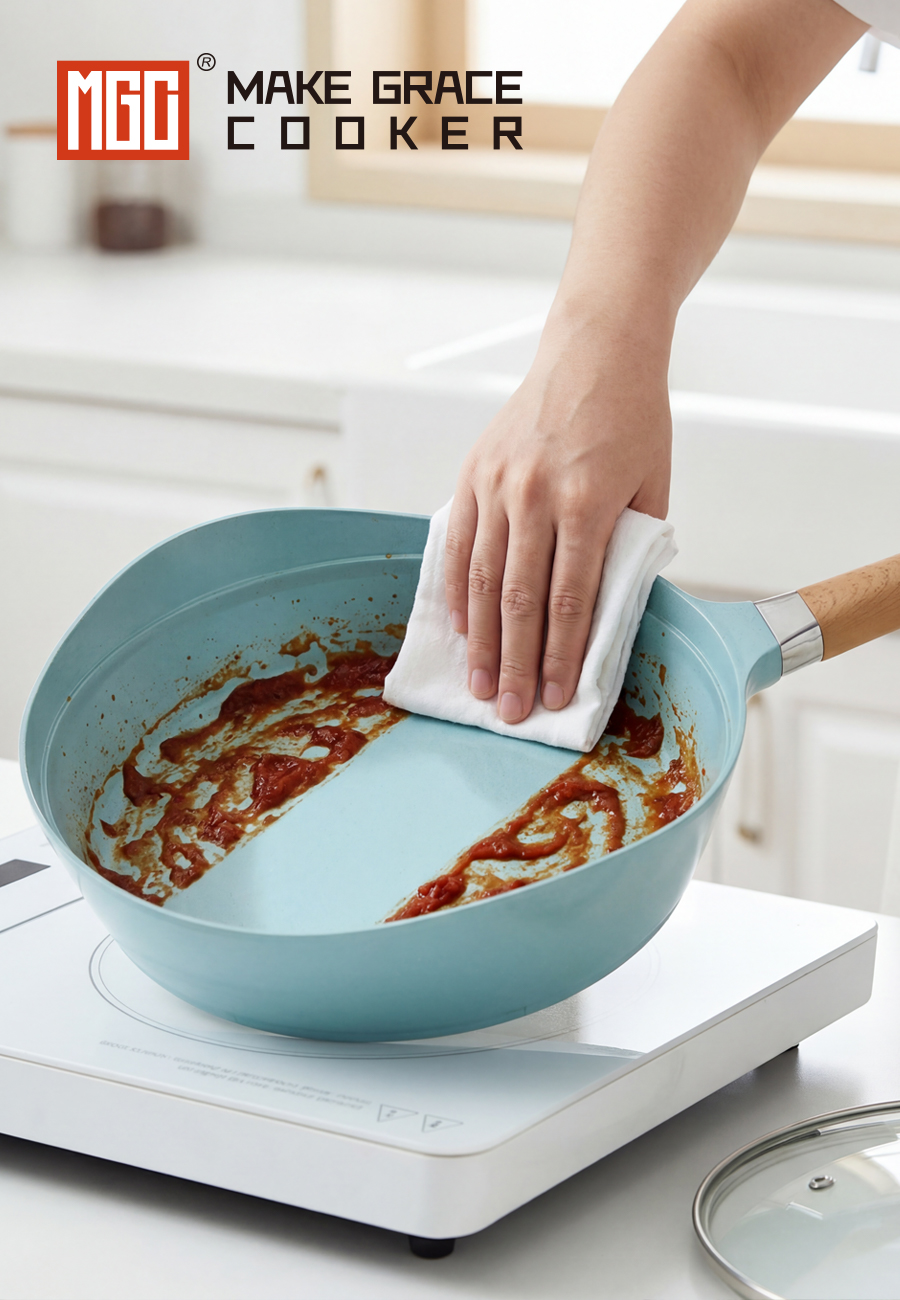
Food residue can become harder to remove when sauces, oils, or other ingredients remain on a pan after cooking. Rather than scrubbing aggressively, allow the cookware to cool and soak it in warm, soapy water. Once the residue softens, use a nonabrasive sponge or suitable soft brush to clean the surface. This approach reduces the need for forceful scraping and helps protect the coating. Cookware businesses can include these instructions in product guides, packaging inserts, or ecommerce content. Clear advice helps customers understand routine maintenance while reminding them to follow the care recommendations supplied with their specific pan.
Reliable Care Information for B2B Cookware Buyers

Reliable Care Information for B2B Cookware Buyers

Accurate product care information helps cookware retailers, wholesalers, and distributors communicate clearly with customers. Important details include the recommended washing method, suitable cleaning tools, drying instructions, and whether the product is dishwasher safe. These requirements can differ across nonstick coatings and cookware constructions, so businesses should avoid applying one set of instructions to every product. MGC Cookware can be contacted to confirm current cookware options and model specific specifications for sourcing discussions. With verified product information, businesses can prepare more useful listings, support customer questions, and build cookware assortments that match their intended market requirements.