EN
What Is Ceramic Cookware and Is It Safe for Everyday Cooking?
When people ask, “ceramic cookware is it safe?”, they are usually trying to solve two different questions at once: what the pan is actually made of, and whether it is a sensible choice for daily meals. The short answer is that food-contact cookware from a transparent, reputable supplier can be a practical option when it is used as intended. But “ceramic” is a broad label, not a safety certificate. The construction, the ceramic coating, the condition of the surface, and the care instructions all matter.
As a cookware specialist, I would start with the material description rather than the color or marketing language. That approach makes the question ceramic cookware is it safe much easier to answer without turning it into a blanket yes-or-no claim.
What does “ceramic cookware” usually mean?
Most products sold as ceramic cookware fall into one of two groups. Fully ceramic pieces are made primarily from ceramic material, often used for baking, serving, or some stovetop applications. Ceramic nonstick cookware, by contrast, usually has a metal body—commonly aluminum—with a ceramic-derived nonstick surface. That surface is often described as a sol-gel ceramic coating.
The distinction matters because a ceramic coating is a surface system, not the whole pan. Its heat response, durability, and care needs depend on the underlying body and on the maker’s specifications. If you are asking ceramic cookware is it safe because you want healthy cookware, check the product description for the intended cooking use, the materials, and the manufacturer’s temperature guidance rather than assuming every ceramic-looking pan performs the same way.
Is ceramic cookware safe for everyday cooking?
For normal household use, cookware designed for food contact and used according to its instructions can be appropriate for everyday cooking. Still, ceramic cookware is it safe is more useful when answered conditionally: it is prudent to rely on a food-contact product from a supplier that clearly identifies its materials and use limits than on an unmarked decorative vessel or a pan with unknown origins.
Food-contact suitability is especially important with ceramicware. FDA guidance on traditional pottery explains that ceramicware with extractable lead above its action levels may be considered adulterated, and decorative or ornamental ware is not automatically suitable for food use. That does not mean every ceramic pan is a lead concern. It means buyers should choose kitchen products made and labeled for cooking or serving food, not repurpose decorative ceramics for high-heat meals.
It is also helpful to separate safety from durability. A ceramic coating may lose easy-release performance over time, particularly if it is overheated, scratched, or cleaned aggressively. That is frustrating, but it is not proof that every worn pan becomes hazardous. Inspect the cooking surface, follow the maker’s instructions, and replace cookware when the surface is badly damaged or the manufacturer recommends replacement.
Why the “ceramic means automatically safe” idea is too simple
The phrase ceramic cookware is it safe can invite an oversimplified comparison: ceramic good, every other nonstick surface bad. Actually, that is not quite right. Materials should be evaluated by their intended use, manufacturing quality, condition, and cooking temperature. Neither a material name nor a “non-toxic” headline tells you everything you need to know.
For cooking safety, ask practical questions: Is the item intended for food contact? Does the brand provide use-and-care instructions? Is the finish intact? Are you staying within the stated stovetop and oven limits? Those questions are more useful than treating one cookware category as universally ideal.
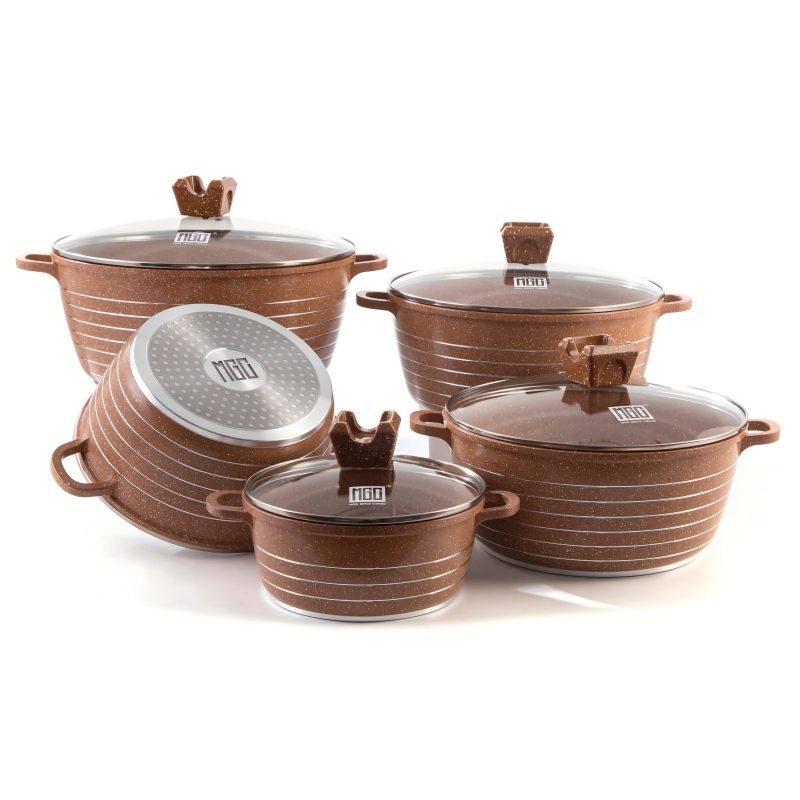
How to use a ceramic coating more carefully
Good habits protect both the ceramic coating and the cooking experience. Many care guides recommend low to medium heat, silicone or wooden utensils, and avoiding empty-pan preheating. High heat can shorten the useful life of a nonstick surface, while metal tools can scratch it. Health Canada gives a conservative public-health reminder not to use nonstick cookware over 260°C/500°F; your own product manual should be the first reference if it specifies a lower limit.
- Warm the pan gradually. Use the heat setting needed for the food instead of defaulting to maximum heat.
- Choose gentler tools. Silicone, wood, nylon, or other approved utensils help protect a ceramic coating.
- Use enough cooking fat when appropriate. Even healthy cookware is not permanently friction-free; a small amount can improve release and reduce scorching.
- Let it cool before washing. Avoid shocking a hot pan with cold water, which can stress the cookware and affect its shape over time.
- Clean without abrasion. A soft sponge and mild cleanser are usually a better match than harsh scouring pads.
If your routine involves intense searing, extended empty-pan heating, or frequent metal utensils, a ceramic-coated skillet may not be the most durable fit. It took many home cooks a while to learn that the most suitable pan depends on cooking style; there is no universal answer.
A buying checklist for healthy cookware decisions
When evaluating kitchen products, use this checklist instead of relying on the word ceramic alone:
- Confirm that the item is expressly intended for food contact and the cooking method you use.
- Read the stated materials, including the pan body and ceramic coating, not just the front-of-box claim.
- Check compatible heat sources, oven limits, and care directions.
- Look for clear company contact information, instructions, and traceable product documentation.
- Choose the size and shape that fits your meals so you are less likely to overheat an empty or undersized pan.
For distributors and buyers sourcing kitchen products, transparent material descriptions and consistent care instructions are also quality signals. They help retailers answer the same question—ceramic cookware is it safe—with practical context instead of a vague promise.
When should you stop using a ceramic pan?
Review the pan after a hard drop, significant warping, persistent flaking, or major surface damage. Minor discoloration or reduced nonstick performance can be a care-and-longevity issue, but visible damage calls for a closer look at the manufacturer’s guidance. Do not use a decorative ceramic item for cooking unless it is clearly labeled for food contact and that use.
The bottom line
So, ceramic cookware is it safe? It can be a sensible choice for everyday cooking when it is made for food contact, comes with clear materials and care information, and is used within its temperature and utensil limits. A ceramic coating does not remove the need for sensible cooking safety practices, and it does not make every item carrying the ceramic label identical. Choose well-documented cookware, treat the surface gently, and match the pan to how you actually cook.