EN
Popular Cookware Categories Available in Modern Kitchen Shops.
A modern cookware shop has to do more than put pans on shelves. For a retailer, distributor, or private-label buyer, the category mix must help customers understand what each piece is for, compare practical trade-offs, and find a well-organized set of kitchen products. The search results behind this topic commonly group cookware with sets, utensils, and accessories. That makes clear navigation as important as the assortment itself.
From a B2B sourcing perspective, the useful question is not which item is universally right. It is which cookware types create a reliable foundation for the customers a cookware shop serves. The categories below provide a practical way to plan a modern range, whether the audience is building a first home kitchen, replacing a worn pan, or selecting stock for retail distribution.
Start with the everyday pan categories
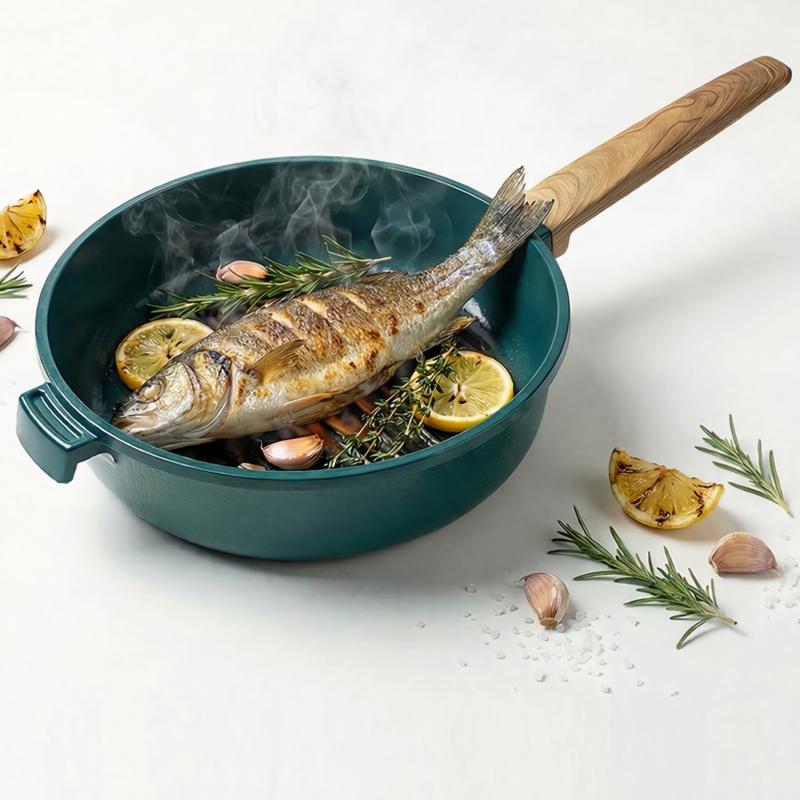
The center of most cookware shop assortments is the everyday pan. Fry pans and skillets suit eggs, vegetables, shallow frying, and quick meals. Sauté pans have taller, straighter sides and are useful when cooks need room for sauces, grains, or one-pan meals. Woks and deep stir-fry pans serve high-volume tossing and fast cooking, while griddles and crepe pans solve more dedicated flat-surface tasks.
These cookware types should not be treated as interchangeable. A shallow fry pan gives easier access for turning food; a deeper pan contains splatter and supports saucy dishes. For a home kitchen that cooks across several cuisines, a flat-bottom wok may make more sense than a second similar skillet. The category label should explain the cooking task first, then the material, size, and stove compatibility.
One observable quality check is the base edge. When comparing cookware at a similar price level, buyers can often see whether the base looks substantial and sits flat. That observation does not replace product testing, but it helps a cookware shop conversation move beyond color and surface finish.
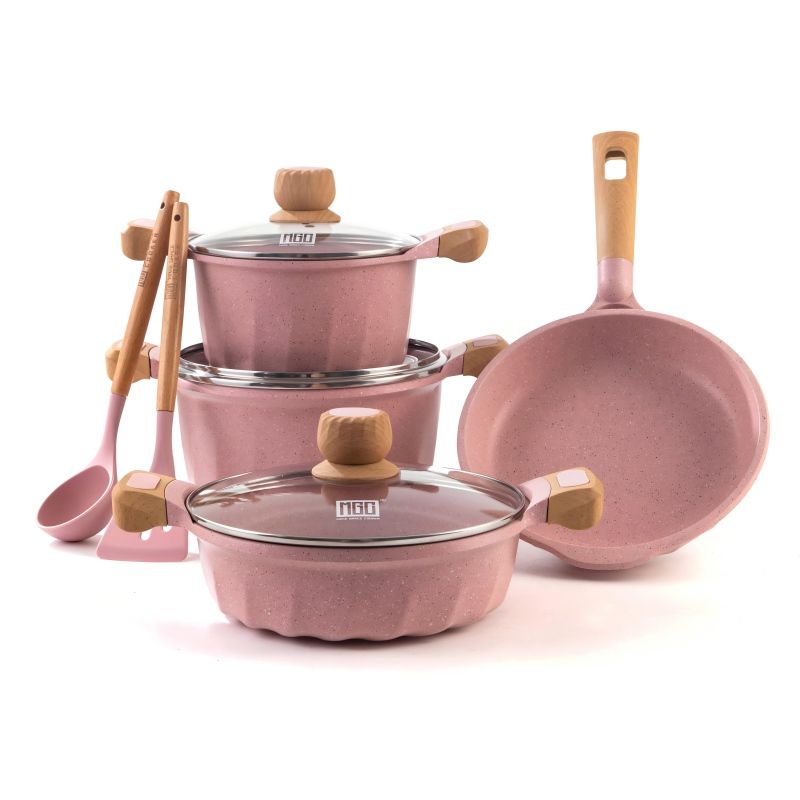 A clear category presentation helps shoppers compare cookware by cooking task.
Build the pot range around meal volume
Pots turn a basic cookware shop into a useful kitchen destination. Saucepans cover smaller portions, heating liquids, and sauces. Casseroles or Dutch-oven-style pots support braising and one-pot meals. Stockpots accommodate larger batches of soup, pasta, or family cooking. A milk pan or small pour pan can be a helpful adjacent option where the market values controlled pouring.
Capacity should be visible in every cookware shop listing and shelf label. A shopper cooking for one or two people may value a compact saucepan, while a larger household may need a deeper pot with stable handles and a lid that fits well. Retailers should avoid assuming that a large set solves every need; some customers will benefit more from two well-chosen core pieces than a cabinet full of rarely used items.
For distributors, a balanced pot assortment means offering a clear progression rather than repeating near-identical diameters. That approach gives sales teams a simple explanation: small daily-use pots, medium multipurpose vessels, and larger family or batch-cooking formats.
Make material and surface categories easy to compare
Material is often the first filter shoppers use in a cookware shop, but the cooking task should lead the decision. Die-cast aluminum and other aluminum-based formats can be practical where responsive heating and manageable weight matter. Nonstick pieces are typically chosen for delicate foods and easy release, while stainless-steel options appeal to buyers who prioritize searing, durability, and a metal-utensil-compatible surface. Ceramic-coated options form another distinct category with their own care and heat-use considerations.
Neither surface is automatically preferable. For eggs and pancakes, a nonstick pan can be a sensible everyday tool. For high-heat browning, a stainless pan may be more appropriate. A cookware shop earns trust by showing the condition behind each recommendation rather than treating a material claim as a shortcut to quality.
Modern kitchen products should also state stove compatibility plainly. Induction-ready labeling matters, but a buyer may still want to inspect base flatness and confirm the item fits the diameter of their cooking zone. That is useful guidance for staff, online category pages, and packaging alike.
Use sets as a starting point, not the only path
Cookware sets are a natural category for a cookware shop because they simplify a first purchase and create a coordinated look. A starter set can combine a frying pan, saucepan, casserole, and lid options into a straightforward daily-cooking bundle. For a retailer, sets can also make merchandising easier because the customer sees a complete meal-preparation story at once.
Still, a set does not automatically suit every customer. A customer with an existing stockpot may need only a skillet and saucepan. A small home kitchen may prefer stackable pieces or a shorter list of multipurpose pans. The useful choice is the one that matches cooking frequency, storage, and household size. This is where a cookware shop can separate a thoughtful range from a collection of duplicate pieces.
Keep cooking tools and kitchen products adjacent, but distinct
Many customers expect a cookware shop to carry more than vessels. Cooking tools such as spatulas, ladles, tongs, whisks, and turners belong close to the pan categories because they support the cooking task. Lids, splatter guards, trivets, and storage solutions are relevant accessories. Knives, bakeware, and coffee equipment may be complementary kitchen products, but they should not obscure the main cookware navigation.
For coated surfaces, a simple selection of silicone, wood, or nylon cooking tools gives shoppers an immediate care-oriented option. This is practical merchandising, not a promise about any individual coating. Clear accessory placement can also raise the usefulness of a home kitchen purchase without forcing unrelated items into the same category.
What B2B buyers should evaluate before expanding a cookware shop range
For wholesale buyers, category coverage is only one part of the decision. Consistency across batches, packaging suitability, clear SKU differentiation, and a sensible mix of sizes all affect retail execution. A range that includes cookware types and sizes can support both individual household buyers and distributors seeking a well-organized assortment, provided the supplier can explain the specification and packing details for each SKU.
MGC, Dongyang Yachu Industry and Trade Co., Ltd, manufactures die-cast aluminum nonstick cookware for global buyers and positions its range for household and wholesale channels. Its category breadth can be relevant to a cookware shop operator looking to build a coordinated assortment, while actual specifications, packaging, and compliance documentation should be confirmed for the destination market and selected items.
A practical buying checklist is short: define the core cooking occasions; select complementary pan and pot sizes; separate surface options by use case; verify stove compatibility and care guidance; then review handle, lid, base, packaging, and batch-consistency details. This sequence helps a cookware shop create choice without making the aisle or website harder to understand.
Conclusion: organize the range around real cooking decisions
The most useful modern cookware shop does not need every possible pan. It needs a clear core of fry pans, sauté pans, woks, saucepans, casseroles, stockpots, and carefully chosen sets, with cooking tools and related kitchen products placed where they genuinely help. When categories reflect meals, materials, capacity, and storage realities, shoppers can choose with more confidence and distributors can build a range with a clearer commercial purpose.